


Search









 Français
 Arabic
Recent Updates
-
Why Glacial Retreat Is a Critical Subject Right Now
Glaciers are more than landforms; they are indicators of planetary health. Their retreat affects ecosystems, freshwater resources, sea levels, and weather worldwide.
A focused Glacial retreat photography exhibition matters now because it reveals pressing, interconnected issues:
1. Water security: Many regions rely on glacial melt for seasonal freshwater supply
2. Sea-level rise: Accelerated ice loss directly contributes to coastal flooding risks
3. Ecosystem disruption: Flora and fauna adapted to glacial environments face rapid displacement
4. Irreversible timelines: Once lost, most glaciers will not return within human lifespans
Presenting these realities visually helps audiences recognize that glacial retreat requires attention and action now, prompting them to question how these changes relate to their own lives and communities.
Read Full Article Here: https://hatch-photo-artistry.odoo.com/blog/our-blog-1/a-glacial-retreat-photography-exhibition-making-climate-change-immediate-and-personal-2Why Glacial Retreat Is a Critical Subject Right Now Glaciers are more than landforms; they are indicators of planetary health. Their retreat affects ecosystems, freshwater resources, sea levels, and weather worldwide. A focused Glacial retreat photography exhibition matters now because it reveals pressing, interconnected issues: 1. Water security: Many regions rely on glacial melt for seasonal freshwater supply 2. Sea-level rise: Accelerated ice loss directly contributes to coastal flooding risks 3. Ecosystem disruption: Flora and fauna adapted to glacial environments face rapid displacement 4. Irreversible timelines: Once lost, most glaciers will not return within human lifespans Presenting these realities visually helps audiences recognize that glacial retreat requires attention and action now, prompting them to question how these changes relate to their own lives and communities. Read Full Article Here: https://hatch-photo-artistry.odoo.com/blog/our-blog-1/a-glacial-retreat-photography-exhibition-making-climate-change-immediate-and-personal-20 Comments 0 Shares 245 Views 0 Reviews -
How Photography Addresses Social Issues and Documents Glaciers in Retreat?
Photography has long served as a documentary tool for recording events, environments, and social conditions. In recent decades, it has increasingly been applied to the examination of social and environmental challenges, including climate change. One significant area within this practice is photography addressing social issues, which uses visual evidence to contextualize complex problems for public understanding. Within this field, Glaciers in Retreat photography has emerged as a focused method for documenting the visible impacts of rising global temperatures on fragile ecosystems. This article examines how photography addressing social issues intersects with Glaciers in Retreat photography, outlining its purpose, methodology, and scope. It provides an objective analysis of how glacier-focused photographic projects contribute to climate discourse through documentation, scale, and long-term visual records.
Read Full Article Here: https://hatchphotoartistry.livepositively.com/how-photography-addresses-social-issues-and-documents-glaciers-in-retreatHow Photography Addresses Social Issues and Documents Glaciers in Retreat? Photography has long served as a documentary tool for recording events, environments, and social conditions. In recent decades, it has increasingly been applied to the examination of social and environmental challenges, including climate change. One significant area within this practice is photography addressing social issues, which uses visual evidence to contextualize complex problems for public understanding. Within this field, Glaciers in Retreat photography has emerged as a focused method for documenting the visible impacts of rising global temperatures on fragile ecosystems. This article examines how photography addressing social issues intersects with Glaciers in Retreat photography, outlining its purpose, methodology, and scope. It provides an objective analysis of how glacier-focused photographic projects contribute to climate discourse through documentation, scale, and long-term visual records. Read Full Article Here: https://hatchphotoartistry.livepositively.com/how-photography-addresses-social-issues-and-documents-glaciers-in-retreat0 Comments 0 Shares 232 Views 0 Reviews -
Eric Hatch Glaciers in Retreat Context
Eric Hatch Glaciers in Retreat is a long-term photographic project documenting glacial environments undergoing visible change. The project draws from landscape photography, environmental portrait photography, and documentary practices. Images are created on-site, often in challenging conditions that require logistical planning and environmental awareness.
Read Full Article Here: https://open.substack.com/pub/hatchphotoartistry/p/environmental-portrait-photographyEric Hatch Glaciers in Retreat Context Eric Hatch Glaciers in Retreat is a long-term photographic project documenting glacial environments undergoing visible change. The project draws from landscape photography, environmental portrait photography, and documentary practices. Images are created on-site, often in challenging conditions that require logistical planning and environmental awareness. Read Full Article Here: https://open.substack.com/pub/hatchphotoartistry/p/environmental-portrait-photography0 Comments 0 Shares 250 Views 0 Reviews -
Why Alaska's Glaciers Tell an Essential Story?
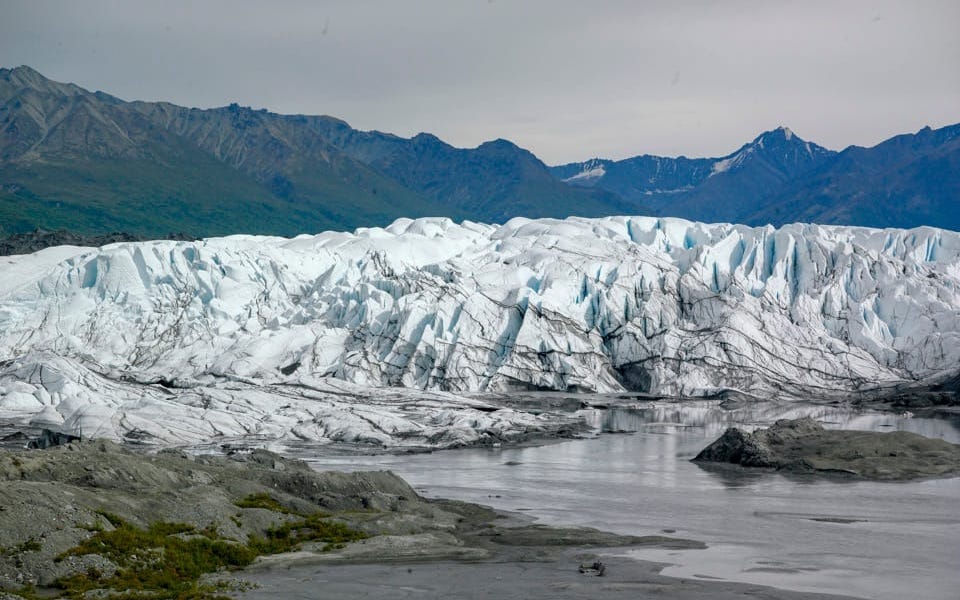
Alaska's glaciers aren't just beautiful. They're critical indicators of global climate patterns, and they're changing faster than almost anywhere else on Earth. Over the past 50 years, Alaska has lost more ice than any other glaciated region in the world except Greenland and Antarctica.
This makes Alaska glacier photography particularly important for museums, educational institutions, and climate advocates. These images provide tangible evidence of climate change, making abstract scientific data visceral and real. When viewers see the dramatic recession of a glacier between photographs taken just years apart, the impact of warming temperatures becomes undeniable.
Hatch Photo Artistry's work in the remote regions of Alaska and the Yukon documents this transformation with both scientific rigor and artistic sensitivity. These aren't just documentary images. They're carefully composed works of fine art that invite viewers to contemplate our relationship with the natural world.
Read full Blog here: https://writeupcafe.com/alaska-glacier-photography-through-the-lens-of-active-geologyWhy Alaska's Glaciers Tell an Essential Story? Alaska's glaciers aren't just beautiful. They're critical indicators of global climate patterns, and they're changing faster than almost anywhere else on Earth. Over the past 50 years, Alaska has lost more ice than any other glaciated region in the world except Greenland and Antarctica. This makes Alaska glacier photography particularly important for museums, educational institutions, and climate advocates. These images provide tangible evidence of climate change, making abstract scientific data visceral and real. When viewers see the dramatic recession of a glacier between photographs taken just years apart, the impact of warming temperatures becomes undeniable. Hatch Photo Artistry's work in the remote regions of Alaska and the Yukon documents this transformation with both scientific rigor and artistic sensitivity. These aren't just documentary images. They're carefully composed works of fine art that invite viewers to contemplate our relationship with the natural world. Read full Blog here: https://writeupcafe.com/alaska-glacier-photography-through-the-lens-of-active-geology0 Comments 0 Shares 384 Views 0 Reviews -
How Photographs Shape Museum Visitor Experiences
The experience of a museum visit is shaped significantly by the photographs on display. Think about exhibitions you've visited. The images you remember probably stand out because they were striking, informative, or emotionally powerful. These weren't accidental qualities—they were intentional choices made by curators and photographers working together. Photography for science museums serves multiple functions simultaneously. It attracts visitors and draws them into exhibitions. It breaks up text-heavy displays and creates visual interest. It communicates information efficiently. It creates emotional connections to content. It leaves lasting impressions that influence how people think about science and the world around them. Modern museums also increasingly recognize that diverse visitors learn in different ways. Some people prefer reading and absorbing information through text. Others are primarily visual learners who need to see concepts to understand them. Photography serves this diverse audience by offering visual pathways to understanding that complement textual explanations.
Read full Article Here: https://hatchphotoartistry.livepositively.com/how-photography-transforms-science-museums-into-powerful-learning-spaces/How Photographs Shape Museum Visitor Experiences The experience of a museum visit is shaped significantly by the photographs on display. Think about exhibitions you've visited. The images you remember probably stand out because they were striking, informative, or emotionally powerful. These weren't accidental qualities—they were intentional choices made by curators and photographers working together. Photography for science museums serves multiple functions simultaneously. It attracts visitors and draws them into exhibitions. It breaks up text-heavy displays and creates visual interest. It communicates information efficiently. It creates emotional connections to content. It leaves lasting impressions that influence how people think about science and the world around them. Modern museums also increasingly recognize that diverse visitors learn in different ways. Some people prefer reading and absorbing information through text. Others are primarily visual learners who need to see concepts to understand them. Photography serves this diverse audience by offering visual pathways to understanding that complement textual explanations. Read full Article Here: https://hatchphotoartistry.livepositively.com/how-photography-transforms-science-museums-into-powerful-learning-spaces/0 Comments 0 Shares 270 Views 0 Reviews -
Why Museums Are Investing in Fine Art Photography for Museums
The rise of the status of photography in museum programming reflects a fundamental change in the way in which the institutions perceive their mission. Museums increasingly recognize that photographic artistry offers unique advantages in engaging contemporary audiences and fulfilling educational mandates.
Read full Blog here: https://medium.com/@hatchphotoartistry29/what-fine-art-photography-for-museums-brings-to-curators-and-cultural-spaces-667cfad61529Why Museums Are Investing in Fine Art Photography for Museums The rise of the status of photography in museum programming reflects a fundamental change in the way in which the institutions perceive their mission. Museums increasingly recognize that photographic artistry offers unique advantages in engaging contemporary audiences and fulfilling educational mandates. Read full Blog here: https://medium.com/@hatchphotoartistry29/what-fine-art-photography-for-museums-brings-to-curators-and-cultural-spaces-667cfad615290 Comments 0 Shares 238 Views 0 Reviews -
The Role of Fine Art Photography for Museums
Fine art photography for museums represents the pinnacle of photographic practice. Museum-quality work requires technical perfection, conceptual depth and an understanding of how images work within larger curatorial stories. This is photography that demands attention and respect by sheer excellence. Fine art photography for museums often explores thematic depths that academic audiences appreciate. Whether documenting environmental change, exploring social structures or examining abstract visual concepts, museum-quality photography brings scholarly rigor to visual storytelling. The work must hold up well when viewed closely, as well as when repeated over and over and as well as the kind of critical analysis to which museum visitors bring their experience. The difference between good photography and fine art photography for museums often comes down to intention and execution. Every element of the image—from composition to lighting, post-processing to printing—must serve the overall artistic vision. There's no room for accidental beauty and lucky shots; everything is deliberate and on purpose.
Read full Blog here: https://www.tumblr.com/hatchphotoartistry/801704996852973568/why-photography-for-university-galleries-mattersThe Role of Fine Art Photography for Museums Fine art photography for museums represents the pinnacle of photographic practice. Museum-quality work requires technical perfection, conceptual depth and an understanding of how images work within larger curatorial stories. This is photography that demands attention and respect by sheer excellence. Fine art photography for museums often explores thematic depths that academic audiences appreciate. Whether documenting environmental change, exploring social structures or examining abstract visual concepts, museum-quality photography brings scholarly rigor to visual storytelling. The work must hold up well when viewed closely, as well as when repeated over and over and as well as the kind of critical analysis to which museum visitors bring their experience. The difference between good photography and fine art photography for museums often comes down to intention and execution. Every element of the image—from composition to lighting, post-processing to printing—must serve the overall artistic vision. There's no room for accidental beauty and lucky shots; everything is deliberate and on purpose. Read full Blog here: https://www.tumblr.com/hatchphotoartistry/801704996852973568/why-photography-for-university-galleries-matters0 Comments 0 Shares 293 Views 0 Reviews -
Why Environmental Portrait Photography Matters
In an age where we're often distracted by superficial details, environmental portrait photography offers something genuinely meaningful. No recognition of people as inseparable from their environments or their understanding requires that they be in context. For businesses and organizations, environmental portraits are much-needed marketing tools. They create trust and connection by showing people in real life in real situations. They are a better way to tell the story of who you are and what you stand for than any polished headshot ever could be. For artists and photographers, mastering environmental portrait photography opens creative doors. It's a challenge that requires technical skill and a great deal of creative vision as well as an understanding of human nature. It requires patience, collaboration and in-depth interest in telling meaningful stories.
Read the full blog here: https://www.theconsumersfeedback.com/guestpost/what-is-an-environmental-portrait-in-photographyWhy Environmental Portrait Photography Matters In an age where we're often distracted by superficial details, environmental portrait photography offers something genuinely meaningful. No recognition of people as inseparable from their environments or their understanding requires that they be in context. For businesses and organizations, environmental portraits are much-needed marketing tools. They create trust and connection by showing people in real life in real situations. They are a better way to tell the story of who you are and what you stand for than any polished headshot ever could be. For artists and photographers, mastering environmental portrait photography opens creative doors. It's a challenge that requires technical skill and a great deal of creative vision as well as an understanding of human nature. It requires patience, collaboration and in-depth interest in telling meaningful stories. Read the full blog here: https://www.theconsumersfeedback.com/guestpost/what-is-an-environmental-portrait-in-photography0 Comments 0 Shares 276 Views 0 Reviews -
The Science Behind Glaciers in Retreat Photography
Before we get down to art, let us get to know science. Glaciers in retreat photography documents a genuine phenomenon: global glaciers have been shrinking at an accelerating rate since the mid-20th century. The primary culprit? Rising global temperature caused by climate change.
When you're examining glaciers in retreat photography, you're looking at visual evidence of something that atmospheric scientists have been warning about for decades. The images reveal glacier termini - the forward edges of coverings of ice - set more back than they had been simply years before. Left behind the movement of glaciers are moraines rocky debris, which are a tell tale of where the ice used to go. Side-by-side comparisons of mobility measured, taken decades apart, tell of the extent of change.
Iceland glacier photography particularly illustrates this process because the changes are so dramatic and visible. Vatnajokull, the largest glacier in Europe, in terms of volume, has been in retreat. The famous glacial lagoon Jokulsarlioun has grown exponentially up to now as more ice has melted into it. These transformations aren't subtle - they're measurable, they're photographable and they're increasingly urgent.
Read the full blog here: https://hatchphotoartistry1.blogspot.com/2025/11/glaciers-in-retreat-photography.htmlThe Science Behind Glaciers in Retreat Photography Before we get down to art, let us get to know science. Glaciers in retreat photography documents a genuine phenomenon: global glaciers have been shrinking at an accelerating rate since the mid-20th century. The primary culprit? Rising global temperature caused by climate change. When you're examining glaciers in retreat photography, you're looking at visual evidence of something that atmospheric scientists have been warning about for decades. The images reveal glacier termini - the forward edges of coverings of ice - set more back than they had been simply years before. Left behind the movement of glaciers are moraines rocky debris, which are a tell tale of where the ice used to go. Side-by-side comparisons of mobility measured, taken decades apart, tell of the extent of change. Iceland glacier photography particularly illustrates this process because the changes are so dramatic and visible. Vatnajokull, the largest glacier in Europe, in terms of volume, has been in retreat. The famous glacial lagoon Jokulsarlioun has grown exponentially up to now as more ice has melted into it. These transformations aren't subtle - they're measurable, they're photographable and they're increasingly urgent. Read the full blog here: https://hatchphotoartistry1.blogspot.com/2025/11/glaciers-in-retreat-photography.html0 Comments 0 Shares 295 Views 0 Reviews -
What Defines Photographic Artistry?
At its core, photographic artistry is about intention. It's the conscious decision to move past documentation and into interpretation. When a photographer practices true photographic artistry, they're asking themselves deeper questions: What am I trying to convey? How can light be used to tell the story? What emotions should such an image evoke?
This method is fundamentally different than normal photography. While conventional photography often aims to accurately represent reality, photographic artistry uses reality as a starting point—and then transforms it. It's the difference between shooting a picture of a forest and building an image that makes those viewing it feel the isolation and majesty of ancient woods.
The technical foundations are important, no doubt. Understanding exposure, composition, color theory and lighting are the necessary building blocks. But these are mere tools in the hands of an artist. What separates true photographic artistry is the vision—that unique perspective that only comes from years of practice, experimentation, and a genuine passion for the craft.
Read the full blog here: https://writeupcafe.com/the-art-of-light-and-vision--mastering-photographic-artistry-in-the-modern-eraWhat Defines Photographic Artistry? At its core, photographic artistry is about intention. It's the conscious decision to move past documentation and into interpretation. When a photographer practices true photographic artistry, they're asking themselves deeper questions: What am I trying to convey? How can light be used to tell the story? What emotions should such an image evoke? This method is fundamentally different than normal photography. While conventional photography often aims to accurately represent reality, photographic artistry uses reality as a starting point—and then transforms it. It's the difference between shooting a picture of a forest and building an image that makes those viewing it feel the isolation and majesty of ancient woods. The technical foundations are important, no doubt. Understanding exposure, composition, color theory and lighting are the necessary building blocks. But these are mere tools in the hands of an artist. What separates true photographic artistry is the vision—that unique perspective that only comes from years of practice, experimentation, and a genuine passion for the craft. Read the full blog here: https://writeupcafe.com/the-art-of-light-and-vision--mastering-photographic-artistry-in-the-modern-era0 Comments 0 Shares 226 Views 0 Reviews



More Stories