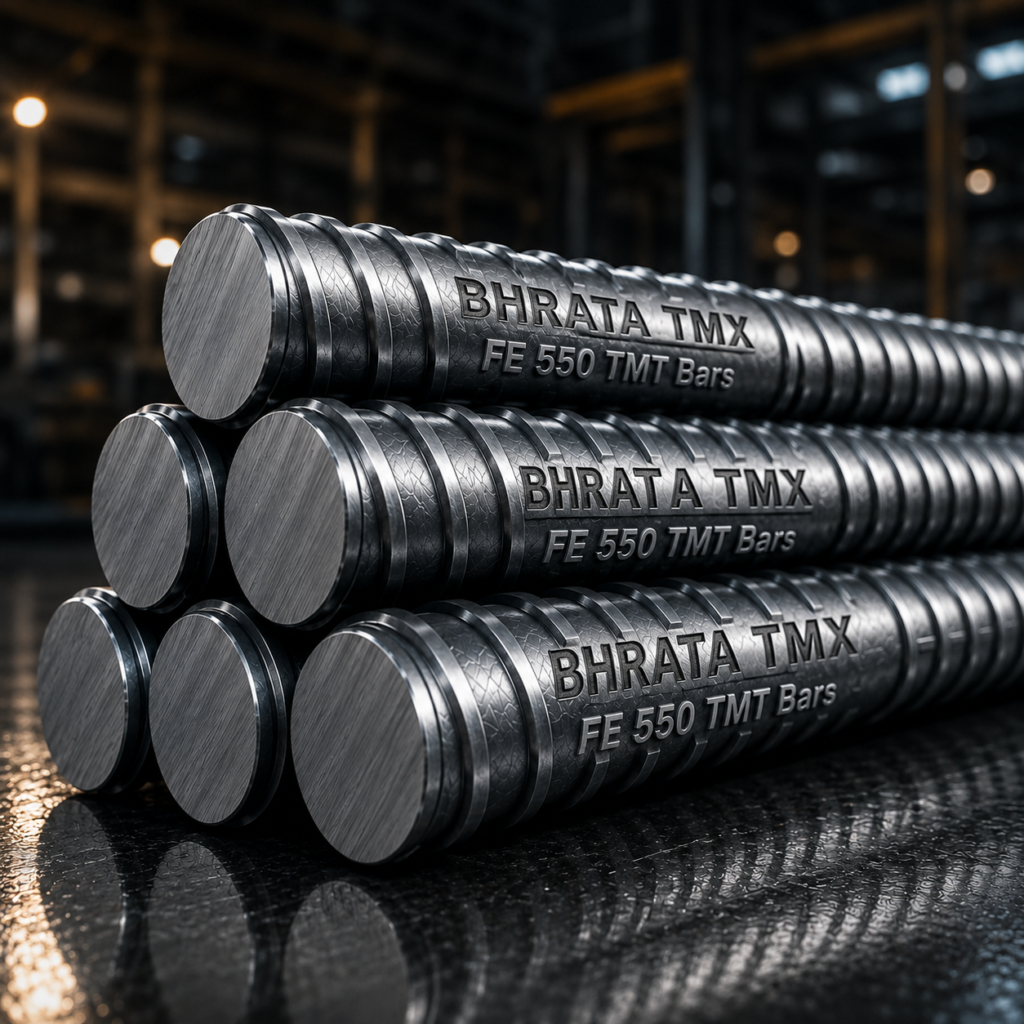
• FE 550 TMT Bars: How Quenching Intensity, Self-Tempering, Cooling Control and Metallurgical Consistency Affect Bar Performance


    FE 550 TMT Bars depend on controlled thermo-mechanical processing to achieve a consistent balance of strength, ductility and toughness. This guide explains how quenching intensity, self-tempering, cooling control and metallurgical consistency influence the core-surface structure, mechanical properties, dimensional stability and overall performance of reinforcement bars. Read More : https://bhratatmx.in/fe-550-tmt-bars/
    #FE550TMTBars #FE550TMTBar #TMTBars #TMTBarManufacturer #TMTBarSuppliers #Quenching #SelfTempering #CoolingControl #MetallurgicalConsistency #TMTManufacturing #ThermoMechanicalTreatment #TMTSteelBars #ReinforcementSteel #ConstructionSteel #TMTBarQuality #SteelQuality #StructuralSteel #ReinforcementBars #TMTBarInIndia #ConstructionMaterials
    FE 550 TMT Bars: How Quenching Intensity, Self-Tempering, Cooling Control and Metallurgical Consistency Affect Bar Performance FE 550 TMT Bars depend on controlled thermo-mechanical processing to achieve a consistent balance of strength, ductility and toughness. This guide explains how quenching intensity, self-tempering, cooling control and metallurgical consistency influence the core-surface structure, mechanical properties, dimensional stability and overall performance of reinforcement bars. Read More : https://bhratatmx.in/fe-550-tmt-bars/ #FE550TMTBars #FE550TMTBar #TMTBars #TMTBarManufacturer #TMTBarSuppliers #Quenching #SelfTempering #CoolingControl #MetallurgicalConsistency #TMTManufacturing #ThermoMechanicalTreatment #TMTSteelBars #ReinforcementSteel #ConstructionSteel #TMTBarQuality #SteelQuality #StructuralSteel #ReinforcementBars #TMTBarInIndia #ConstructionMaterials
    BHRATATMX.IN
    FE 550 TMT Bars Manufacturer in Gujarat | Best Price
    Looking for FE 550 TMT bars in Gujarat or Rajasthan? High-quality steel bars for strong construction. Contact us for bulk pricing.
    0 التعليقات 0 المشاركات 157 مشاهدة 0 معاينة
  • The Future of Vacuum Contact Material: Innovations,
    Trends, and Unlocking Growth Opportunities to 2033


     The Vacuum
    Contact Material market is on the cusp of a profound transformation, fueled
    by relentless innovation and the increasing demand for high-performance,
    sustainable electrical switching solutions. This forward-looking report delves
    into the critical trends, disruptive technologies, and emerging opportunities
    that will define the industry's trajectory for the next decade. As the global
    energy landscape evolves and industrial automation accelerates, the need for
    reliable and efficient vacuum interrupter components has never been greater.


     📊
    Preview the Future with a Free Sample
    Report:https://www.marketreportanalytics.com/report/vacuum-contact-material-156535/sample-report


    Emerging Trends and Technological Disruptions


     The vacuum contact material market is
    poised for robust expansion, projected to grow at a Compound Annual Growth Rate
    (CAGR) of approximately 6.5% from a base year of 2025, with a market size
    estimated to be around $4.38 billion. This growth will be propelled by several
    key technological disruptions. The integration of advanced simulation and
    AI-driven material design is enabling the development of novel alloys with
    enhanced arc-quenching capabilities and extended lifespan. Sustainability is
    emerging as a paramount concern, driving research into eco-friendly
    manufacturing processes and materials with reduced environmental impact.
    Furthermore, the increasing miniaturization and efficiency requirements in
    power electronics and grid modernization initiatives are spurring demand for
    highly specialized vacuum contact materials that can withstand extreme
    operating conditions. Digitalization of manufacturing processes will also lead
    to improved quality control and cost efficiencies.


    High-Growth Segments of Tomorrow


     In terms of applications, the Vacuum Circuit Breaker segment is
    expected to remain the dominant force, driven by widespread adoption in power
    transmission and distribution networks. However, significant growth is
    anticipated in the Vacuum Contactor
    and Vacuum Load Switch segments,
    fueled by their increasing use in industrial automation, renewable energy
    integration, and electric vehicle charging infrastructure. On the materials
    front, while traditional Copper Chromium
    Contact Material will continue to hold a substantial market share,
    advancements in Copper Tungsten Contact
    Material and Silver Tungsten Carbide
    Contact Material are expected to unlock new performance frontiers,
    particularly in high-voltage and high-current applications. The
    "Others" category, encompassing next-generation composite materials,
    is also a fertile ground for innovation.


    Pioneers and Innovators


     The competitive landscape is
    characterized by a dynamic interplay of established players and emerging
    innovators. Companies such as Plansee,
    MODISON, and NAECO are at the forefront, investing heavily in research and
    development to create next-generation contact materials. Nidec Corporation, Electrical
    Contacts International, and Checon
    are also key contributors, focusing on enhancing material properties and
    optimizing manufacturing processes. Fudar
    Alloy Materials, Longsun Group, Guilin Electrical Equipment Scientific
    Research Institute, Wenzhou Hongfeng
    Electrical Alloy, Wenzhou Saijin
    Electrical Alloy, Wenzhou Teda Alloy,
    Shaanxi Sirui Advanced Materials,
    and Luoyang Tongfang Technology
    represent a crucial segment of innovative firms, driving technological advancements
    and expanding the market's capabilities.


     📊
    Explore the full report for deeper
    insights:https://www.marketreportanalytics.com/reports/vacuum-contact-material-156535


      Contact US:Craig Francis (PR & Marketing Manager)Data Insights MarketAnsec House, 3rd Floor, Tank RoadYerwada, Pune📞 Phone: +1 231-515-5523📧 Email:
    sales@marketreportanalytics.com
    The Future of Vacuum Contact Material: Innovations, Trends, and Unlocking Growth Opportunities to 2033  The Vacuum Contact Material market is on the cusp of a profound transformation, fueled by relentless innovation and the increasing demand for high-performance, sustainable electrical switching solutions. This forward-looking report delves into the critical trends, disruptive technologies, and emerging opportunities that will define the industry's trajectory for the next decade. As the global energy landscape evolves and industrial automation accelerates, the need for reliable and efficient vacuum interrupter components has never been greater.  📊 Preview the Future with a Free Sample Report:https://www.marketreportanalytics.com/report/vacuum-contact-material-156535/sample-report Emerging Trends and Technological Disruptions  The vacuum contact material market is poised for robust expansion, projected to grow at a Compound Annual Growth Rate (CAGR) of approximately 6.5% from a base year of 2025, with a market size estimated to be around $4.38 billion. This growth will be propelled by several key technological disruptions. The integration of advanced simulation and AI-driven material design is enabling the development of novel alloys with enhanced arc-quenching capabilities and extended lifespan. Sustainability is emerging as a paramount concern, driving research into eco-friendly manufacturing processes and materials with reduced environmental impact. Furthermore, the increasing miniaturization and efficiency requirements in power electronics and grid modernization initiatives are spurring demand for highly specialized vacuum contact materials that can withstand extreme operating conditions. Digitalization of manufacturing processes will also lead to improved quality control and cost efficiencies. High-Growth Segments of Tomorrow  In terms of applications, the Vacuum Circuit Breaker segment is expected to remain the dominant force, driven by widespread adoption in power transmission and distribution networks. However, significant growth is anticipated in the Vacuum Contactor and Vacuum Load Switch segments, fueled by their increasing use in industrial automation, renewable energy integration, and electric vehicle charging infrastructure. On the materials front, while traditional Copper Chromium Contact Material will continue to hold a substantial market share, advancements in Copper Tungsten Contact Material and Silver Tungsten Carbide Contact Material are expected to unlock new performance frontiers, particularly in high-voltage and high-current applications. The "Others" category, encompassing next-generation composite materials, is also a fertile ground for innovation. Pioneers and Innovators  The competitive landscape is characterized by a dynamic interplay of established players and emerging innovators. Companies such as Plansee, MODISON, and NAECO are at the forefront, investing heavily in research and development to create next-generation contact materials. Nidec Corporation, Electrical Contacts International, and Checon are also key contributors, focusing on enhancing material properties and optimizing manufacturing processes. Fudar Alloy Materials, Longsun Group, Guilin Electrical Equipment Scientific Research Institute, Wenzhou Hongfeng Electrical Alloy, Wenzhou Saijin Electrical Alloy, Wenzhou Teda Alloy, Shaanxi Sirui Advanced Materials, and Luoyang Tongfang Technology represent a crucial segment of innovative firms, driving technological advancements and expanding the market's capabilities.  📊 Explore the full report for deeper insights:https://www.marketreportanalytics.com/reports/vacuum-contact-material-156535   Contact US:Craig Francis (PR & Marketing Manager)Data Insights MarketAnsec House, 3rd Floor, Tank RoadYerwada, Pune📞 Phone: +1 231-515-5523📧 Email: sales@marketreportanalytics.com
    Market Report Analytics: Get Market Research Analysis with Market Share, Market Size & Forecast Analysis
    Market Report Analytics stands as a premier Market Research Company, offering quantified B2B research that uncovers high-growth emerging opportunities impacting over 80% of global corporate revenues. Our team of Analysts diligently tracks high-growth studies, providing detailed statistical analyses and in-depth insights into market trends and dynamics, delivering a comprehensive industry overview. Employing an extensive research methodology, we fuse critical insights with industry factors and market forces to deliver optimal value to our clients. Drawing from reliable primary and secondary data sources, our analysts and consultants extract actionable data tailored to meet our clients' business objectives.
    0 التعليقات 0 المشاركات 10 مشاهدة 0 معاينة
  • Understanding Heat Treatment Processes for Stronger and More Reliable Metals

    In the world of metal manufacturing, achieving the right balance of hardness, strength, and durability is essential. This is where heat treatment processes play a crucial role. Whether used in foundries, forging units, or precision engineering industries, heat treatment allows metals to perform better under demanding conditions. By heating and cooling metals in a controlled manner, engineers can modify internal structures and enhance performance for specific applications.

    One of the most widely used heat treatment processes is annealing. This process involves heating the metal to a specific temperature and then allowing it to cool slowly. Annealing helps reduce hardness, improve ductility, and relieve internal stresses that develop during machining or shaping. It is commonly applied to steel, copper, and aluminum alloys to prepare them for further manufacturing stages.

    Another important process is quenching and tempering. Quenching rapidly cools the metal—often in water or oil—to lock in hardness. However, this can make the material brittle, which is why tempering is performed afterward. During tempering, the metal is reheated to a lower temperature and cooled again to achieve a perfect balance of strength and toughness. Together, these heat treatment processes are essential for tools, automotive parts, shafts, and high-load components.

    Normalizing is another technique used to refine grain structure and improve mechanical properties. This method involves heating the metal above its critical temperature and then allowing it to cool in open air. Among all heat treatment processes, normalizing is known for producing uniform mechanical properties across the material, making it ideal for structural components and heavy-duty machinery parts.

    Case hardening is also widely used in industries that require a hard exterior surface with a tough inner core. Processes like carburizing, nitriding, and carbonitriding introduce additional carbon or nitrogen into the outer layer of the metal. These specialized heat treatment processes create components with exceptional wear resistance, perfect for gears, camshafts, bearings, and tools that must withstand friction and pressure.

    For advanced manufacturing, induction hardening offers precision-level results. This technique uses high-frequency induction coils to rapidly heat the metal surface before quenching. Induction hardening provides localized strengthening without affecting the entire component. As one of the most efficient heat treatment processes, it is ideal for automotive parts, axles, crankshafts, and heavy industrial equipment.

    Overall, understanding different heat treatment processes helps industries produce metals that are strong, durable, and optimally suited for their applications. Whether preparing raw castings, strengthening finished components, or enhancing wear resistance, heat treatment remains one of the most important steps in modern metal manufacturing.
    Website : https://jalpadeviengg.com/introduction-furnace-of-inductotherm-make-medium-frequency-melting-pouring-2025/
    Understanding Heat Treatment Processes for Stronger and More Reliable Metals In the world of metal manufacturing, achieving the right balance of hardness, strength, and durability is essential. This is where heat treatment processes play a crucial role. Whether used in foundries, forging units, or precision engineering industries, heat treatment allows metals to perform better under demanding conditions. By heating and cooling metals in a controlled manner, engineers can modify internal structures and enhance performance for specific applications. One of the most widely used heat treatment processes is annealing. This process involves heating the metal to a specific temperature and then allowing it to cool slowly. Annealing helps reduce hardness, improve ductility, and relieve internal stresses that develop during machining or shaping. It is commonly applied to steel, copper, and aluminum alloys to prepare them for further manufacturing stages. Another important process is quenching and tempering. Quenching rapidly cools the metal—often in water or oil—to lock in hardness. However, this can make the material brittle, which is why tempering is performed afterward. During tempering, the metal is reheated to a lower temperature and cooled again to achieve a perfect balance of strength and toughness. Together, these heat treatment processes are essential for tools, automotive parts, shafts, and high-load components. Normalizing is another technique used to refine grain structure and improve mechanical properties. This method involves heating the metal above its critical temperature and then allowing it to cool in open air. Among all heat treatment processes, normalizing is known for producing uniform mechanical properties across the material, making it ideal for structural components and heavy-duty machinery parts. Case hardening is also widely used in industries that require a hard exterior surface with a tough inner core. Processes like carburizing, nitriding, and carbonitriding introduce additional carbon or nitrogen into the outer layer of the metal. These specialized heat treatment processes create components with exceptional wear resistance, perfect for gears, camshafts, bearings, and tools that must withstand friction and pressure. For advanced manufacturing, induction hardening offers precision-level results. This technique uses high-frequency induction coils to rapidly heat the metal surface before quenching. Induction hardening provides localized strengthening without affecting the entire component. As one of the most efficient heat treatment processes, it is ideal for automotive parts, axles, crankshafts, and heavy industrial equipment. Overall, understanding different heat treatment processes helps industries produce metals that are strong, durable, and optimally suited for their applications. Whether preparing raw castings, strengthening finished components, or enhancing wear resistance, heat treatment remains one of the most important steps in modern metal manufacturing. Website : https://jalpadeviengg.com/introduction-furnace-of-inductotherm-make-medium-frequency-melting-pouring-2025/
    JALPADEVIENGG.COM
    Introduction Furnace of Inductotherm Make, Medium Frequency – Melting & Pouring 2025 - JALPA DEVI ENGINEERING
    The heat treatment process involves controlled heating and cooling of metals in order to alter their mechanical properties without affecting their shape.
    0 التعليقات 0 المشاركات 280 مشاهدة 0 معاينة
  • Excellence in Metal: The Manufacture of Engineering Castings Indore at Jalpa Devi Engineering

    In the industrial heartland of central India, manufacturing precision components demands craftsmanship, technology and rigorous quality control. The manufacture of engineering castings indore stands as a hallmark of capability and reliability—especially when a foundry like Jalpa Devi Engineering commits to excellence in every step of casting. From selecting the right alloys to final machining, this process supports high-performance machinery across sectors.

    Why Indore is a Strategic Hub

    The city of Indore is an emerging manufacturing hub where the manufacture of engineering castings indore leverages local skilled labour, proximity to raw-material suppliers, and efficient logistics. Foundries here excel in producing grey iron, ductile iron, alloy steels and complex cast parts that serve heavy-engineering, mining, infrastructure and machine-building industries. This concentration of capability makes Indore a smart choice for casting projects that demand precision and scale.

    Key Elements of High-Quality Engineering Castings

    The manufacture of engineering castings indore demands a systematic approach:

    Material selection & melt quality: Casting starts by choosing appropriate alloys (e.g., high-manganese steel, chromium alloys) and melting them in induction or electric arc furnaces. Clean melts reduce defects and improve mechanical performance.

    Moulding and pattern-making: Accurate patterns and cores are essential. The foundry creates moulds with correct shrinkage allowance and thermal balance to avoid porosity or misalignment.

    Pouring and solidification control: During the manufacture of engineering castings indore, molten metal must be poured under carefully monitored conditions—temperature, flow rate and gating system are all calibrated to ensure the casting fills properly and solidifies without unwanted internal stresses.

    Heat treatment and inspection: Post-casting operations like annealing, normalising or quenching improve microstructure and relieve stresses. Rigorous inspection—such as non-destructive testing, hardness measurement and metallographic analysis—ensures the casting meets required specifications.

    Machining & finishing: The final stage of the manufacture of engineering castings indore involves precision machining, surface finishing and assembly support. This step transforms the bare casting into ready-to-use components for heavy machinery.

    Benefits of Choosing a Local Castings Manufacturer

    Partnering with a foundry experienced in the manufacture of engineering castings indore offers several advantages:

    Shorter lead time: Local supply chains and regional logistics mean faster turnaround from design to delivery.

    Cost efficiency: Reduced transport costs and local material access help optimise budgets without compromising quality.

    Better collaboration: Proximity enables face-to-face technical discussions, onsite visits, and quicker response to changes or feedback.

    Tailored solutions: Foundries in Indore are well-versed in diverse alloys and custom component sizes, ensuring your casting is designed for optimum fit and performance.

    Ensuring Long-Term Performance

    When the manufacture of engineering castings indore is done correctly, the components deliver long service life even in tough operating conditions—wear-intensive, high-stress or corrosive environments. High-quality castings reduce downtime, minimise maintenance costs, and boost machinery efficiency. For industries such as construction, mining, power generation or equipment manufacturing, this reliability is critical.

    Why Jalpa Devi Engineering is Your Trusted Partner

    At Jalpa Devi Engineering, the manufacture of engineering castings indore is backed by decades of experience, advanced foundry technology, rigorous quality systems and a customer-centric mindset. The foundry works closely with clients from concept to delivery, advising on alloy selection, geometry, thermal processing and finishing. This commitment to both manufacturing excellence and client support ensures that castings not only meet but often exceed expectations.
    Website : https://jalpadeviengg.com/engineering-castings-a-crucial-component-for-high-performance-machinery/
    Excellence in Metal: The Manufacture of Engineering Castings Indore at Jalpa Devi Engineering In the industrial heartland of central India, manufacturing precision components demands craftsmanship, technology and rigorous quality control. The manufacture of engineering castings indore stands as a hallmark of capability and reliability—especially when a foundry like Jalpa Devi Engineering commits to excellence in every step of casting. From selecting the right alloys to final machining, this process supports high-performance machinery across sectors. Why Indore is a Strategic Hub The city of Indore is an emerging manufacturing hub where the manufacture of engineering castings indore leverages local skilled labour, proximity to raw-material suppliers, and efficient logistics. Foundries here excel in producing grey iron, ductile iron, alloy steels and complex cast parts that serve heavy-engineering, mining, infrastructure and machine-building industries. This concentration of capability makes Indore a smart choice for casting projects that demand precision and scale. Key Elements of High-Quality Engineering Castings The manufacture of engineering castings indore demands a systematic approach: Material selection & melt quality: Casting starts by choosing appropriate alloys (e.g., high-manganese steel, chromium alloys) and melting them in induction or electric arc furnaces. Clean melts reduce defects and improve mechanical performance. Moulding and pattern-making: Accurate patterns and cores are essential. The foundry creates moulds with correct shrinkage allowance and thermal balance to avoid porosity or misalignment. Pouring and solidification control: During the manufacture of engineering castings indore, molten metal must be poured under carefully monitored conditions—temperature, flow rate and gating system are all calibrated to ensure the casting fills properly and solidifies without unwanted internal stresses. Heat treatment and inspection: Post-casting operations like annealing, normalising or quenching improve microstructure and relieve stresses. Rigorous inspection—such as non-destructive testing, hardness measurement and metallographic analysis—ensures the casting meets required specifications. Machining & finishing: The final stage of the manufacture of engineering castings indore involves precision machining, surface finishing and assembly support. This step transforms the bare casting into ready-to-use components for heavy machinery. Benefits of Choosing a Local Castings Manufacturer Partnering with a foundry experienced in the manufacture of engineering castings indore offers several advantages: Shorter lead time: Local supply chains and regional logistics mean faster turnaround from design to delivery. Cost efficiency: Reduced transport costs and local material access help optimise budgets without compromising quality. Better collaboration: Proximity enables face-to-face technical discussions, onsite visits, and quicker response to changes or feedback. Tailored solutions: Foundries in Indore are well-versed in diverse alloys and custom component sizes, ensuring your casting is designed for optimum fit and performance. Ensuring Long-Term Performance When the manufacture of engineering castings indore is done correctly, the components deliver long service life even in tough operating conditions—wear-intensive, high-stress or corrosive environments. High-quality castings reduce downtime, minimise maintenance costs, and boost machinery efficiency. For industries such as construction, mining, power generation or equipment manufacturing, this reliability is critical. Why Jalpa Devi Engineering is Your Trusted Partner At Jalpa Devi Engineering, the manufacture of engineering castings indore is backed by decades of experience, advanced foundry technology, rigorous quality systems and a customer-centric mindset. The foundry works closely with clients from concept to delivery, advising on alloy selection, geometry, thermal processing and finishing. This commitment to both manufacturing excellence and client support ensures that castings not only meet but often exceed expectations. Website : https://jalpadeviengg.com/engineering-castings-a-crucial-component-for-high-performance-machinery/
    JALPADEVIENGG.COM
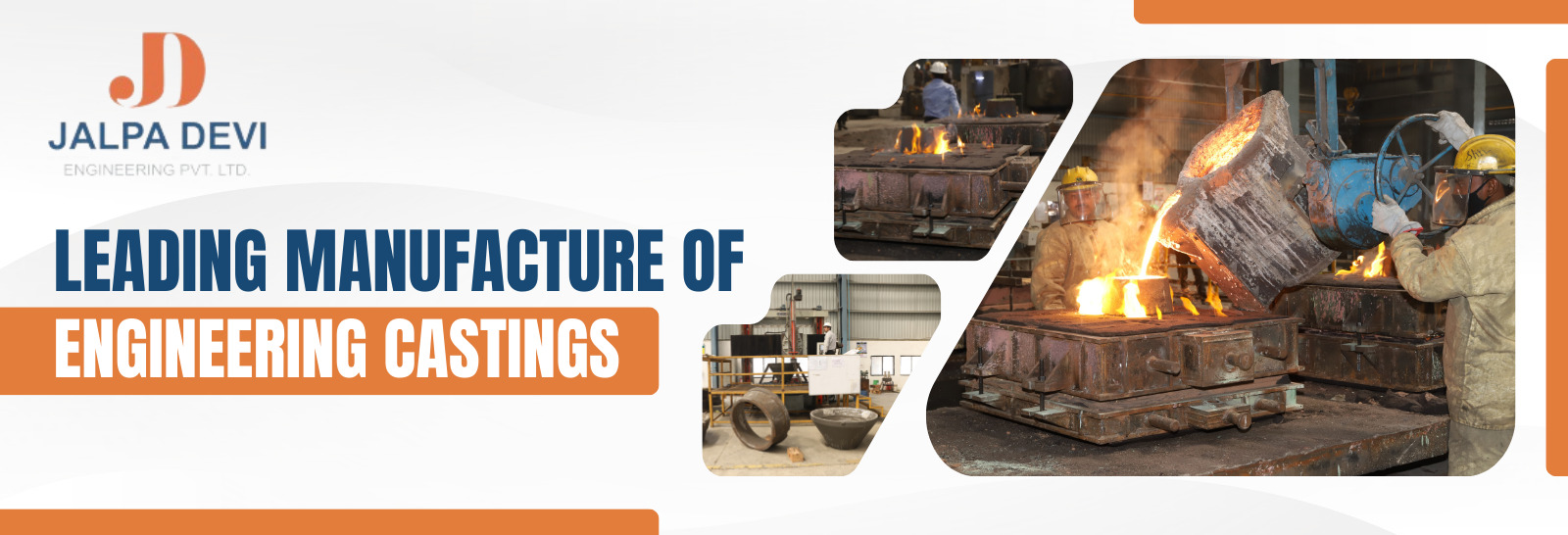
    Engineering Castings: A Crucial Component for High-Performance Machinery - JALPA DEVI ENGINEERING
    The demand over the years for quality engineering castings has increased ever since heavier-duty performance was needed from equipment used in industries such as construction, mining, and material handling.
    0 التعليقات 0 المشاركات 171 مشاهدة 0 معاينة
  • Advanced Engineering Excellence: Understanding Metal Casting Processes for Superior Manufacturing

    In the manufacturing and engineering industries, metal casting processes play a crucial role in producing strong, durable, and precisely shaped components. These processes allow molten metal to be formed into complex designs that would be difficult or expensive to create through machining alone. At Jalpadevi Engineering, mastering advanced casting and heat-treatment techniques ensures that every component meets high performance, durability, and dimensional accuracy standards.

    What Are Metal Casting Processes?

    Metal casting processes involve melting metal, pouring it into a specially designed mould, allowing it to solidify, and then removing the finished part for cleaning and further treatment. This method is widely used because it supports a variety of metals, complex shapes, and large component sizes. The key steps include pattern making, mould preparation, melting, pouring, cooling, shake-out, and finishing. With proper control at each stage, high-quality cast components can be produced consistently.

    Common Types of Metal Casting Processes

    Manufacturers choose specific metal casting processes based on required strength, precision, shape complexity, and production volume. Some widely used methods include:

    Sand Casting – A flexible and cost-effective method ideal for large and medium-sized parts. Sand moulds allow for complex geometries and are suitable for both small and large production batches.

    Die Casting – This high-pressure casting method is best for mass production of highly accurate, smaller components. It creates smooth surface finishes and tight dimensional control.

    Investment Casting – Also called lost-wax casting, this process is used when fine detail, smooth surfaces, and complex shapes are required.

    Shell Moulding & Permanent Mould Casting – These processes offer better precision and surface finish compared to basic sand casting.

    Centrifugal Casting – Ideal for cylindrical parts, it ensures uniform density and exceptional material strength.

    Each of these metal casting processes offers unique advantages depending on the application, design, and performance requirements.

    Importance of Heat Treatment in Casting

    Heat treatment is an essential step that enhances the material properties of cast components. After casting, metals may have internal stresses, hardness variations, or structural inconsistencies. Heat treatment techniques like annealing, quenching, normalizing, and tempering improve:

    Strength

    Toughness

    Wear resistance

    Dimensional stability

    At Jalpadevi Engineering, both casting and heat treatment work together to produce components that meet strict industry standards.

    Quality Control and Defect Prevention

    Even with advanced metal casting processes, maintaining quality requires strict inspection and defect prevention. Common casting defects such as porosity, shrinkage cavities, inclusions, or surface imperfections can affect the component’s performance. Using high-quality raw materials, precise mould design, optimized melting practices, and thorough inspection ensures the final product is reliable and defect-free.

    Final Thoughts

    In modern manufacturing, the selection and execution of metal casting processes determine the overall quality and service life of a component. With advanced casting capabilities, expert metallurgy, and rigorous testing, Jalpadevi Engineering ensures components that deliver superior strength, accuracy, and durability. Whether for industrial machinery, infrastructure, automotive, or engineering applications, mastering the right casting technique is key to achieving exceptional results.
    Website : https://jalpadeviengg.com/steel-casting-heat-treatment-and-metal-casting-processes/
    Advanced Engineering Excellence: Understanding Metal Casting Processes for Superior Manufacturing In the manufacturing and engineering industries, metal casting processes play a crucial role in producing strong, durable, and precisely shaped components. These processes allow molten metal to be formed into complex designs that would be difficult or expensive to create through machining alone. At Jalpadevi Engineering, mastering advanced casting and heat-treatment techniques ensures that every component meets high performance, durability, and dimensional accuracy standards. What Are Metal Casting Processes? Metal casting processes involve melting metal, pouring it into a specially designed mould, allowing it to solidify, and then removing the finished part for cleaning and further treatment. This method is widely used because it supports a variety of metals, complex shapes, and large component sizes. The key steps include pattern making, mould preparation, melting, pouring, cooling, shake-out, and finishing. With proper control at each stage, high-quality cast components can be produced consistently. Common Types of Metal Casting Processes Manufacturers choose specific metal casting processes based on required strength, precision, shape complexity, and production volume. Some widely used methods include: Sand Casting – A flexible and cost-effective method ideal for large and medium-sized parts. Sand moulds allow for complex geometries and are suitable for both small and large production batches. Die Casting – This high-pressure casting method is best for mass production of highly accurate, smaller components. It creates smooth surface finishes and tight dimensional control. Investment Casting – Also called lost-wax casting, this process is used when fine detail, smooth surfaces, and complex shapes are required. Shell Moulding & Permanent Mould Casting – These processes offer better precision and surface finish compared to basic sand casting. Centrifugal Casting – Ideal for cylindrical parts, it ensures uniform density and exceptional material strength. Each of these metal casting processes offers unique advantages depending on the application, design, and performance requirements. Importance of Heat Treatment in Casting Heat treatment is an essential step that enhances the material properties of cast components. After casting, metals may have internal stresses, hardness variations, or structural inconsistencies. Heat treatment techniques like annealing, quenching, normalizing, and tempering improve: Strength Toughness Wear resistance Dimensional stability At Jalpadevi Engineering, both casting and heat treatment work together to produce components that meet strict industry standards. Quality Control and Defect Prevention Even with advanced metal casting processes, maintaining quality requires strict inspection and defect prevention. Common casting defects such as porosity, shrinkage cavities, inclusions, or surface imperfections can affect the component’s performance. Using high-quality raw materials, precise mould design, optimized melting practices, and thorough inspection ensures the final product is reliable and defect-free. Final Thoughts In modern manufacturing, the selection and execution of metal casting processes determine the overall quality and service life of a component. With advanced casting capabilities, expert metallurgy, and rigorous testing, Jalpadevi Engineering ensures components that deliver superior strength, accuracy, and durability. Whether for industrial machinery, infrastructure, automotive, or engineering applications, mastering the right casting technique is key to achieving exceptional results. Website : https://jalpadeviengg.com/steel-casting-heat-treatment-and-metal-casting-processes/
    JALPADEVIENGG.COM
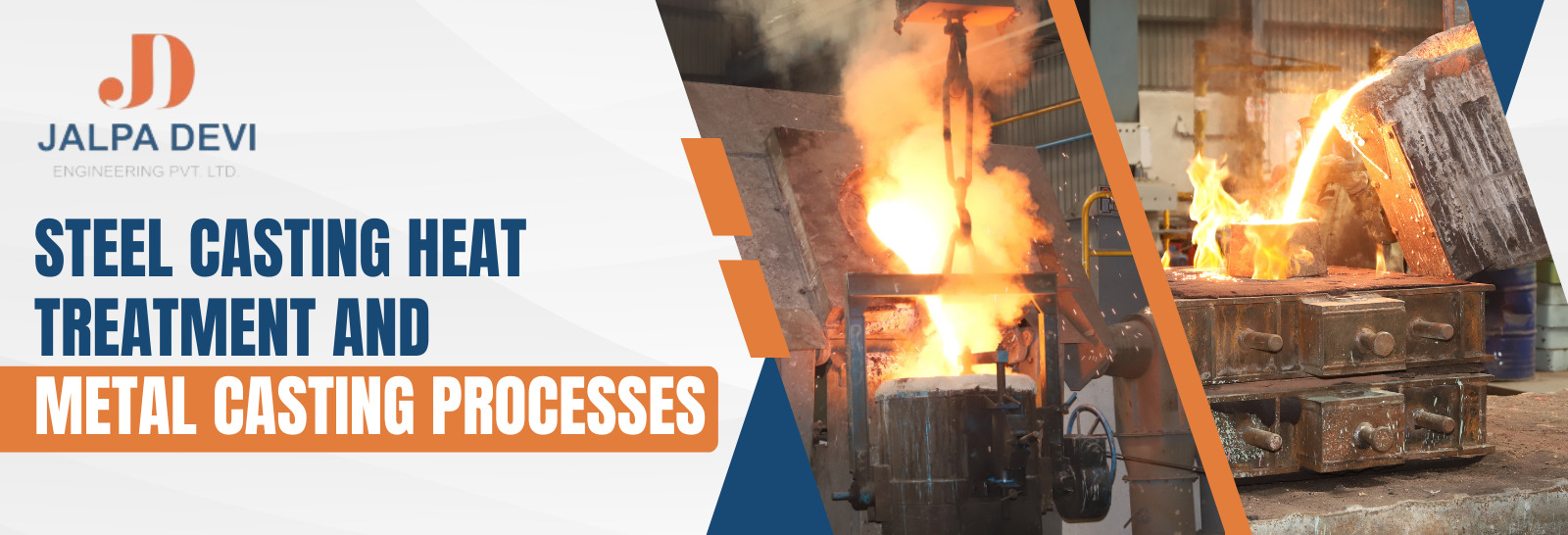
    Steel Casting Heat Treatment and Metal Casting Processes - JALPA DEVI ENGINEERING
    Metal casting represents one of the basic processes of manufacture. Molten metal is poured into the mold to create a specific shape that could be highly complex and closely defined.
    0 التعليقات 0 المشاركات 198 مشاهدة 0 معاينة
  • Steel Casting: Powering the Future of High-Strength Industrial Components

    In the world of modern manufacturing, steel casting stands as one of the most dependable and versatile production methods for creating high-strength, complex, and durable components. From heavy machinery to mining equipment, railways, construction, and automotive sectors, steel casting enables industries to produce parts that can withstand extreme loads, impacts, and harsh working environments. As demand for precision engineering continues to rise, steel casting remains a cornerstone for industries that prioritize reliability and performance.

    The primary advantage of steel casting is its ability to form large and intricate shapes that cannot be achieved through traditional machining or fabrication. By pouring molten steel into a mold, manufacturers can produce components with internal cavities, detailed contours, and optimized designs without needing complex assemblies. This process ensures better structural integrity and reduced weak points, making it ideal for manufacturing jaws, crusher components, gears, valves, and heavy-duty industrial parts.

    Another significant benefit of using steel casting lies in its exceptional mechanical properties. Cast steel offers high tensile strength, corrosion resistance, toughness, and long-lasting durability. These qualities are essential for machines and structures that operate under heavy stress. Heat treatment processes such as quenching, tempering, and annealing further enhance the material’s strength and performance, ensuring cast components deliver consistent results over their entire service life.

    The steel casting process requires precision at every stage—pattern design, mold preparation, melting, pouring, cooling, and finishing. Each step plays a crucial role in determining the final product’s quality. Modern foundries rely on advanced technologies to improve casting accuracy, minimize defects, and achieve fine surface finishes. With continuous improvements in melting techniques and mold materials, the steel casting industry has evolved into a highly efficient and quality-driven manufacturing field.

    Quality control is one of the most critical aspects of steel casting. Manufacturers conduct rigorous tests such as ultrasonic inspection, radiography, hardness testing, and dimensional checks to ensure each component meets strict industry standards. These inspections guarantee that the final product is free from defects and capable of withstanding demanding industrial conditions. For industries where safety and performance are non-negotiable, this level of quality assurance is invaluable.

    Cost efficiency is another major advantage of choosing steel casting. Producing a part through casting often eliminates the need for multiple fabricated sections, reduces welding requirements, and minimizes machining time. The ability to create near-net-shape components saves both raw material and labor costs, making it a practical solution for large-scale and heavy-duty production needs.

    In summary, steel casting continues to play a vital role in powering industrial growth. Its strength, versatility, cost-effectiveness, and ability to create complex geometries make it an irreplaceable manufacturing method. As industries expand and engineering challenges become more demanding, steel casting remains a trusted solution for delivering high-performance components that stand the test of time.
    Website : https://jalpadeviengg.com/discover-indias-leading-jaw-plate-manufacturer-in-2025/
    Steel Casting: Powering the Future of High-Strength Industrial Components In the world of modern manufacturing, steel casting stands as one of the most dependable and versatile production methods for creating high-strength, complex, and durable components. From heavy machinery to mining equipment, railways, construction, and automotive sectors, steel casting enables industries to produce parts that can withstand extreme loads, impacts, and harsh working environments. As demand for precision engineering continues to rise, steel casting remains a cornerstone for industries that prioritize reliability and performance. The primary advantage of steel casting is its ability to form large and intricate shapes that cannot be achieved through traditional machining or fabrication. By pouring molten steel into a mold, manufacturers can produce components with internal cavities, detailed contours, and optimized designs without needing complex assemblies. This process ensures better structural integrity and reduced weak points, making it ideal for manufacturing jaws, crusher components, gears, valves, and heavy-duty industrial parts. Another significant benefit of using steel casting lies in its exceptional mechanical properties. Cast steel offers high tensile strength, corrosion resistance, toughness, and long-lasting durability. These qualities are essential for machines and structures that operate under heavy stress. Heat treatment processes such as quenching, tempering, and annealing further enhance the material’s strength and performance, ensuring cast components deliver consistent results over their entire service life. The steel casting process requires precision at every stage—pattern design, mold preparation, melting, pouring, cooling, and finishing. Each step plays a crucial role in determining the final product’s quality. Modern foundries rely on advanced technologies to improve casting accuracy, minimize defects, and achieve fine surface finishes. With continuous improvements in melting techniques and mold materials, the steel casting industry has evolved into a highly efficient and quality-driven manufacturing field. Quality control is one of the most critical aspects of steel casting. Manufacturers conduct rigorous tests such as ultrasonic inspection, radiography, hardness testing, and dimensional checks to ensure each component meets strict industry standards. These inspections guarantee that the final product is free from defects and capable of withstanding demanding industrial conditions. For industries where safety and performance are non-negotiable, this level of quality assurance is invaluable. Cost efficiency is another major advantage of choosing steel casting. Producing a part through casting often eliminates the need for multiple fabricated sections, reduces welding requirements, and minimizes machining time. The ability to create near-net-shape components saves both raw material and labor costs, making it a practical solution for large-scale and heavy-duty production needs. In summary, steel casting continues to play a vital role in powering industrial growth. Its strength, versatility, cost-effectiveness, and ability to create complex geometries make it an irreplaceable manufacturing method. As industries expand and engineering challenges become more demanding, steel casting remains a trusted solution for delivering high-performance components that stand the test of time. Website : https://jalpadeviengg.com/discover-indias-leading-jaw-plate-manufacturer-in-2025/
    JALPADEVIENGG.COM
    Discover India’s Leading Jaw Plate Manufacturer in 2025: Jalpadevi Engineering Pvt. Ltd.
    Jaw plates are one of the smallest yet most impactful components affecting performance and life of heavy machines in the mining, construction, and crushing industries. If jaw plates are the "face" of a crushing machine, then they must be durable, precise, and wear resistant.
    0 التعليقات 0 المشاركات 103 مشاهدة 0 معاينة
  • Unveiling the Global Sulfur Hexafluoride Market: Trends, Opportunities, and Forecasts


    The Sulfur Hexafluoride Market is a critical component within various industrial sectors, primarily due to its unique dielectric properties, inertness, and high density. This report delves deep into the intricate dynamics of this specialized market, offering comprehensive insights for stakeholders looking to capitalize on emerging opportunities and navigate potential challenges. Explore the extensive analysis of the Sulfur Hexafluoride Market to understand its trajectory.


    📊 Get a Free Sample Report + All Related Graphs & Charts:Download Now!
    Market Overview and Dynamics
    The global Sulfur Hexafluoride Market is poised for significant growth, driven by the increasing demand from the power and energy sector for electrical insulation and arc quenching in switchgear. The electronics industry's reliance on SF6 for plasma etching and cleaning processes further fuels market expansion. While the market demonstrates robust growth, stringent environmental regulations concerning greenhouse gas emissions present a notable challenge. However, advancements in recycling technologies and the development of alternative gases are shaping a dynamic market landscape. The market is projected to experience a Compound Annual Growth Rate (CAGR) of greater than 4.00%. The current market valuation is estimated at approximately USD 1,500 Million, with a projected future value reaching around USD 2,200 Million by the end of the forecast period.
    Competitive Landscape and Key Players
    The Sulfur Hexafluoride Market is characterized by a competitive environment featuring both established multinational corporations and agile emerging players. These companies are actively engaged in research and development to enhance product quality, expand production capacities, and explore sustainable alternatives. Key players dominating the market include Honeywell International Inc, Solvay, Air Products and Chemicals Inc, AIR LIQUIDE, Fujian Yongjing Technology Co Ltd, Advanced Specialty Gases, Kanto Denka Kogyo Co Ltd, Linde plc, MATHESON TRI-GAS INC, Concorde Specialty Gases Inc, and SHOWA DENKO K K.
    Regional Outlook
    The global Sulfur Hexafluoride Market is analyzed across key regions including Asia Pacific (China, India, Japan, South Korea, Rest of Asia Pacific), North America (United States, Canada, Mexico), Europe (Germany, United Kingdom, Italy, France, Rest of Europe), South America (Brazil, Argentina, Rest of South America), and the Middle East and Africa (Saudi Arabia, South Africa, Rest of Middle East and Africa). The Asia Pacific region, particularly China, is expected to lead the market growth due to its expanding industrial base and significant investments in power infrastructure. North America and Europe remain crucial markets, driven by advanced technological adoption and strict environmental standards necessitating efficient gas management.

    📊 Explore the full report for deeper insights:View Report
    Table of Contents (TOC)
    • Introduction
    • Market Dynamics
    • Drivers
    • Restraints
    • Opportunities
    • Challenges
    • Segmentation Analysis
    • By Product Type
    • By Application
    • Competitive Landscape
    • Key Players Analysis
    • Market Share Analysis
    • Strategic Initiatives
    • Regional Outlook
    • Research Methodology

    📊 For complete insights, forecasts, and data tables, visit the full report:Read More

    Contact US:
    Craig Francis (PR & Marketing Manager)
    Data Insights Market
    Ansec House, 3rd Floor, Tank Road
    Yerwada, Pune
    📞 Phone: +1 231-515-5523
    📧 Email: sales@datainsightsmarket.com
    Unveiling the Global Sulfur Hexafluoride Market: Trends, Opportunities, and Forecasts The Sulfur Hexafluoride Market is a critical component within various industrial sectors, primarily due to its unique dielectric properties, inertness, and high density. This report delves deep into the intricate dynamics of this specialized market, offering comprehensive insights for stakeholders looking to capitalize on emerging opportunities and navigate potential challenges. Explore the extensive analysis of the Sulfur Hexafluoride Market to understand its trajectory. 📊 Get a Free Sample Report + All Related Graphs & Charts:Download Now! Market Overview and Dynamics The global Sulfur Hexafluoride Market is poised for significant growth, driven by the increasing demand from the power and energy sector for electrical insulation and arc quenching in switchgear. The electronics industry's reliance on SF6 for plasma etching and cleaning processes further fuels market expansion. While the market demonstrates robust growth, stringent environmental regulations concerning greenhouse gas emissions present a notable challenge. However, advancements in recycling technologies and the development of alternative gases are shaping a dynamic market landscape. The market is projected to experience a Compound Annual Growth Rate (CAGR) of greater than 4.00%. The current market valuation is estimated at approximately USD 1,500 Million, with a projected future value reaching around USD 2,200 Million by the end of the forecast period. Competitive Landscape and Key Players The Sulfur Hexafluoride Market is characterized by a competitive environment featuring both established multinational corporations and agile emerging players. These companies are actively engaged in research and development to enhance product quality, expand production capacities, and explore sustainable alternatives. Key players dominating the market include Honeywell International Inc, Solvay, Air Products and Chemicals Inc, AIR LIQUIDE, Fujian Yongjing Technology Co Ltd, Advanced Specialty Gases, Kanto Denka Kogyo Co Ltd, Linde plc, MATHESON TRI-GAS INC, Concorde Specialty Gases Inc, and SHOWA DENKO K K. Regional Outlook The global Sulfur Hexafluoride Market is analyzed across key regions including Asia Pacific (China, India, Japan, South Korea, Rest of Asia Pacific), North America (United States, Canada, Mexico), Europe (Germany, United Kingdom, Italy, France, Rest of Europe), South America (Brazil, Argentina, Rest of South America), and the Middle East and Africa (Saudi Arabia, South Africa, Rest of Middle East and Africa). The Asia Pacific region, particularly China, is expected to lead the market growth due to its expanding industrial base and significant investments in power infrastructure. North America and Europe remain crucial markets, driven by advanced technological adoption and strict environmental standards necessitating efficient gas management. 📊 Explore the full report for deeper insights:View Report Table of Contents (TOC) • Introduction • Market Dynamics • Drivers • Restraints • Opportunities • Challenges • Segmentation Analysis • By Product Type • By Application • Competitive Landscape • Key Players Analysis • Market Share Analysis • Strategic Initiatives • Regional Outlook • Research Methodology 📊 For complete insights, forecasts, and data tables, visit the full report:Read More Contact US: Craig Francis (PR & Marketing Manager) Data Insights Market Ansec House, 3rd Floor, Tank Road Yerwada, Pune 📞 Phone: +1 231-515-5523 📧 Email: sales@datainsightsmarket.com
    0 التعليقات 0 المشاركات 149 مشاهدة 0 معاينة