PaySocial | Monetize your skills and share your projects
kanikavatsyayan

kanikavatsyayan

@kanikavatsyayan
Recent Updates
  • A Guide to Enterprise Test Automation Tool Selection
    Choosing an automation tool involves more than comparing features. Learn how to assess enterprise testing requirements, evaluate automation frameworks, measure scalability, and identify tools that support faster releases, consistent test execution, and improved software quality.

    Visit: https://mindxmaster.com/how-to-choose-the-right-test-automation-tools-for-enterprise-software/
    #TestAutomationTool #TestAutomationSolution #EnterpriseTestAutomationTool #AutomationTool
    MINDXMASTER.COM
    How to Choose the Right Test Automation Tools for Enterprise Software - MindxMaster
    How to choose test automation tools for enterprise software: maintenance, team fit, CI/CD integration, and pilot tips.
    61 Views
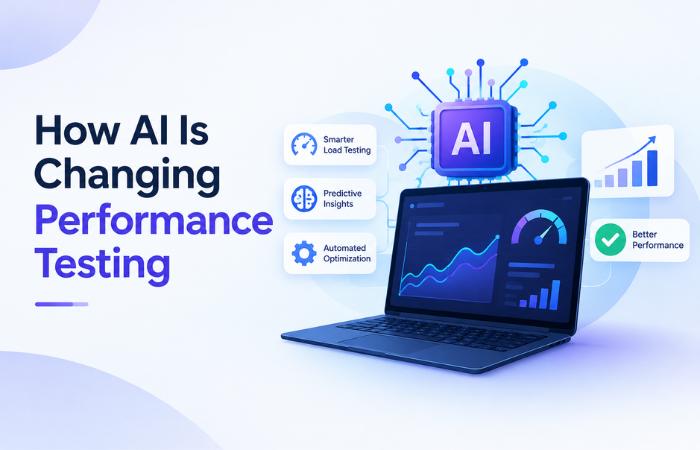
  • Explore the latest trends in AI-powered performance testing and how intelligent automation, anomaly detection, and predictive insights help identify performance issues earlier. Discover practical ways to optimize application performance, reduce testing effort, and support faster releases.

    Find more: https://my.ai.se/resources/how-ai-is-changing-performance-testing

    #PerformanceTesting #AIPerformanceTesting #LoadTesting
    MY.AI.SE
    How AI Is Changing Performance Testing
    Performance testing has always been about answering practical questions. How many users can the application support? What happens when traffic spikes? Which component becomes the bottleneck first? How quickly does the system recover once the load drops? Those questions have not changed. The way teams answer them is starting to. Traditional performance testing relies heavily on scripted workloads, predefined thresholds, monitoring tools, and manual analysis. That still works, but modern applications have become harder to read. Microservices, cloud infrastructure, APIs, databases, queues, third-party services, and distributed architectures can all contribute to one slow transaction. This is where AI performance testing is beginning to make a difference. From Static Load Profiles to Smarter Workloads A standard performance test often starts with a predefined load model. For example, 500 users log in, 200 browse products, 100 add items to cart, and 50 complete checkout. That is useful, but production traffic rarely behaves so neatly. User behavior changes by time of day, geography, campaigns, devices, and feature usage. A flash sale may create a very different traffic pattern from a normal weekday. Some workflows may spike while others remain steady. AI-powered performance testing can help build workload models from real usage patterns rather than relying only on manually designed scenarios. Historical traffic, transaction volumes, user journeys, and incident data can all be used to identify what a realistic stress pattern should look like. That makes the test closer to the way the system is actually used. AI Makes Bottleneck Analysis Faster Running a load test is often the easy part. The harder part begins when response time jumps from 400 milliseconds to four seconds and the team needs to figure out why. Was it the database? A slow API? Thread exhaustion? Memory pressure? A downstream service? Network latency? A cloud autoscaling delay? In a distributed system, the answer may involve several of these at once. AI can help correlate metrics across logs, traces, infrastructure, and application performance data to narrow down the likely source of degradation. Instead of manually reviewing dozens of dashboards, engineers can use AI-assisted analysis to identify recurring patterns and suspicious relationships. This is where performance engineering benefits most: not from automating the test itself, but from reducing the time between “something slowed down” and “this is probably where the problem is.” Performance Testing Automation Is Becoming More Adaptive Automation in performance testing is not new. Teams have been running load tests inside CI/CD pipelines for years. What is changing is how those tests are selected and interpreted. A traditional pipeline may run the same suite after every major build. An AI-assisted system can be more selective. If a release touches only a payment service, the system may prioritize payment-heavy scenarios. If a previous deployment caused memory issues under sustained load, that pattern can be given more weight in future runs. This makes performance testing automation more responsive to actual release risk. The goal is not necessarily to run fewer tests. It is to run the ones that are most useful at that moment. Anomaly Detection Is One of the Strongest Use Cases Performance degradation is not always dramatic. A page may become 8% slower after one release, then another 6% slower later. Neither change looks serious in isolation, but together they point to a trend. AI-based anomaly detection is well suited to finding these gradual shifts. It can compare current results against historical baselines and flag behavior that falls outside the normal range, even if the system has not crossed a hard threshold. That is particularly useful in cloud environments where normal performance may vary depending on traffic, resource allocation, & infrastructure conditions. AI Workload Testing Can Improve Capacity Planning Capacity planning often depends on historical data & projected business growth. AI workload testing can help generate and compare scenarios that would be tedious to model manually. This is useful when teams need to prepare for events such as product launches, sales campaigns, onboarding spikes, or geographic expansion. It does not eliminate the need for actual load testing, but it can make those tests better targeted. Tools Still Matter AI does not remove the need for established performance testing tools. Teams still need reliable ways to generate load, measure latency, monitor infrastructure, trace requests, and validate system behavior under pressure. The tool choice depends on architecture, protocols, scalability requirements, scripting needs, & how deeply the test needs to integrate with CI/CD. For teams comparing options, this overview of performance testing tools is a useful place to evaluate the strengths and trade-offs of commonly used platforms. AI is increasingly becoming another layer on top of that tooling rather than a replacement for it. There Are Limits to What AI Can Infer AI-assisted analysis is useful, but teams should be careful about treating every recommendation as fact. A model may identify correlation without proving causation. It may flag one service as suspicious when the real issue originates elsewhere. Poor monitoring data can also lead to poor conclusions. That means engineers still need to validate the diagnosis. Performance problems are often architectural. Understanding caching, concurrency, network behavior, database design, and service dependencies still requires technical judgment. AI can accelerate investigation, but it cannot compensate for weak observability or incomplete test design. Performance Testing Is Becoming More Predictive The biggest change is that AI testing is moving performance work away from purely reactive analysis. Traditional testing often asks, “What broke under load?” AI-assisted approaches can also ask, “What is likely to break next?” That shift matters. By combining historical failures, traffic patterns, release changes, anomaly detection, and infrastructure data, teams can make better decisions about where to focus testing before performance problems reach production. The fundamentals remain the same: apply realistic load, measure the system, identify bottlenecks, and fix them. What AI changes is how quickly teams can get from raw performance data to useful engineering decisions.
    181 Views
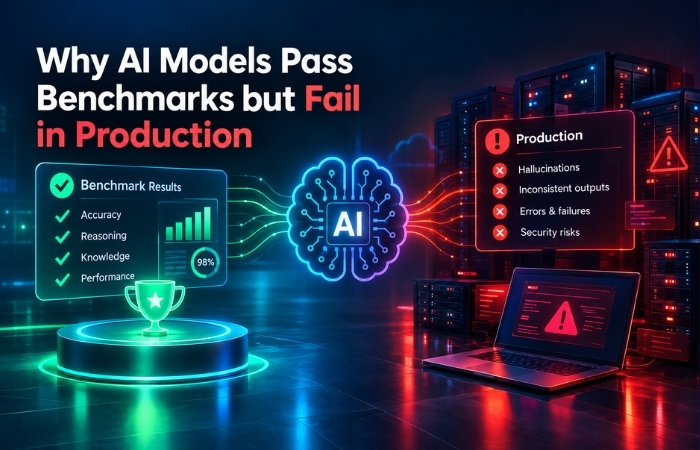
  • Are benchmark scores giving you false confidence in AI quality? Explore practical AI testing strategies to uncover hallucinations, tool execution errors, prompt injection risks, and performance drift in production systems.

    Visit:https://www.softwaretestingmagazine.com/knowledge/why-ai-models-pass-benchmarks-but-fail-in-production/
    WWW.SOFTWARETESTINGMAGAZINE.COM
    Why AI Models Pass Benchmarks but Fail in Production
    There are many cases where AI models that worked fine in development start to behave badly in production. In this article, Kanika Vatsyayan discusses the causes that lead to this situation. He recommends moving from static assessments to continuous quality engineering for AI models.
    52 Views
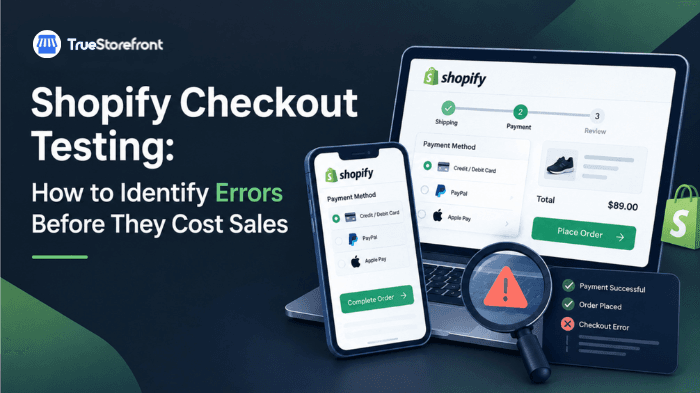
  • Use a practical Shopify checkout testing checklist to verify payment processing, cart functionality, address validation, shipping options, and order placement. Catch checkout bugs before launch or after store updates, improve the customer journey, and minimize disruptions that can lead to abandoned carts and lost revenue.

    Know more: https://truestorefront.com/blog/shopify-checkout-testing

    #ShopifyCheckoutTesting, #ShopifyTesting, #SoftwareTesting, #QA
    TRUESTOREFRONT.COM
    Shopify Checkout Testing: How to Identify Errors Before They Cost Sales | Truestorefront.com
    Learn how Shopify checkout testing helps identify payment failures, discount errors, shipping issues, and mobile checkout problems before they cost sales.
    224 Views
  • Why Functional Testing Is Essential for AI Agents

    Functional testing helps ensure AI agents perform tasks correctly, follow business rules, and use tools safely. Explore key testing techniques, edge-case validation, workflow automation, and security checks to reduce risks and improve AI agent reliability.

    More details: https://www.rswebsols.com/article/agent-functional-testing/

    #AgentFunctionalTesting, #AIAgentTesting, #AITesting, #SoftwareTesting, #TestAutomation, #FunctionalTesting
    WWW.RSWEBSOLS.COM
    Agent Functional Testing: 5 Steps to Validate AI Agents
    Agent Functional Testing verifies that AI agents complete tasks correctly, use the appropriate tools, follow business rules, and respect security boundaries.
    145 Views
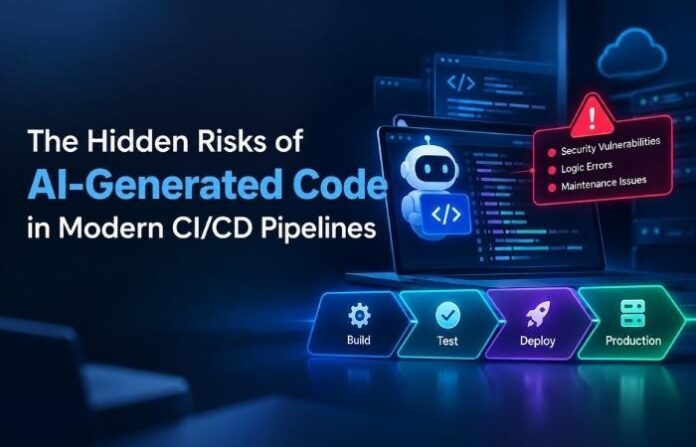
  • AI-generated code offers speed and efficiency, but it can also introduce defects that compromise software quality and pipeline security. Understand the challenges of validating AI-written code and discover how proactive testing and security validation help teams reduce risks before deployment.

    Also read: https://technologicz.com/the-hidden-risks-of-ai-generated-code-in-modern-ci-cd-pipelines/

    #AIGeneratedCode, #CICDPipeline, #SoftwareTesting, #ApplicationSecurity, #DevSecOps
    TECHNOLOGICZ.COM
    The Hidden Risks of AI-Generated Code in Modern CI/CD Pipelines
    The utilization of artificial intelligence coding assistants has shifted from experimental autocomplete scripts to an integrated component of the software development lifecycle.
    210 Views
  • Traditional testing methods can struggle with complex applications and frequent releases. AI-driven testing introduces intelligent automation, faster analysis, and adaptive testing capabilities. Explore how modern QA teams can use AI alongside established testing practices to improve coverage, reduce repetitive effort, and deliver reliable software.

    For more: https://landofcoder.com/blog/ai-vs-traditional-testing.html

    #AITesting, #AIvsTraditionalTesting, #SoftwareTesting, #QATesting
    LANDOFCODER.COM
    AI vs Traditional Testing: Which Approach Is Better for Ecommerce?
    Compare AI vs traditional testing for ecommerce to see where each approach works best across regression, visual, security, performance, and functional testing.
    201 Views
  • Key Challenges in Testing LLM-Powered Applications

    Discover the major challenges involved in testing LLM-powered applications, including unpredictable responses, hallucinations, prompt injection, bias, data privacy, and performance issues. Learn practical strategies to validate AI systems and improve their reliability.

    Find more: https://technologicz.com/testing-llm-powered-applications-key-risks-and-best-practices/

    #LLMTesting, #AITesting, #AIApplicationTesting, #GenerativeAITesting, #AIEngineering, #AIValidation, #PromptTesting, #AIsecurity
    TECHNOLOGICZ.COM
    Testing LLM-Powered Applications: Key Risks and Best Practices
    An LLM introduces probabilistic behavior into otherwise deterministic software. Traditional testing may expect an API to return a particular status
    295 Views
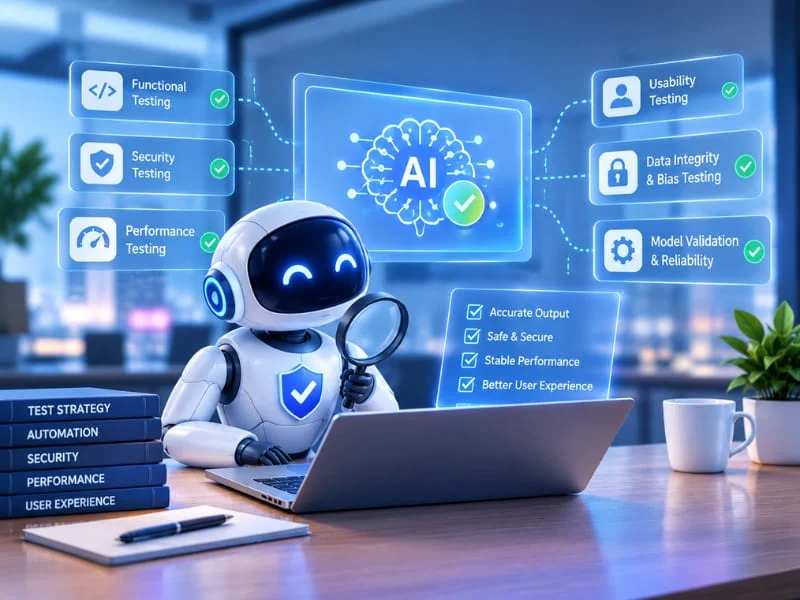
  • Discover why QA is becoming essential for building trustworthy AI applications. From validating models and data to detecting unexpected behavior, this article explains the Role of QA in Reliable AI Applications and the testing practices teams can use to improve AI quality.

    Also visit: https://www.europeanbusinessreview.com/the-role-of-qa-in-developing-reliable-ai-applications/

    #AITesting #SoftwareTesting, #AIApplications, #AIQuality, #ModelValidation, #AIModelTesting, #TestAutomation
    WWW.EUROPEANBUSINESSREVIEW.COM
    The Role of QA in Developing Reliable AI Applications
    The Role of QA in Reliable AI Applications through testing for security, accuracy, fairness, and system reliability.
    352 Views
  • AI guardrails must withstand more than simple test cases. Learn how structured testing can uncover vulnerabilities involving prompt injection, jailbreaks, data leakage, hallucinations, and malicious inputs while preparing AI systems for secure production use.

    More details: https://sooperarticles.com/testing-ai-guardrails-how-to-verify-safety-controls-before-production-1946503

    #AIGuardrails, #AITesting, #AISafety, #GenerativeAI, #AIQuality, #SoftwareTesting, #AIAssurance
    323 Views
More Stories
© 2026 PaySocial | Monetize your skills and share your projects