-
146 المنشورات
-
0 الصور
-
0 الفيديوهات
-
Vice-President لدى QA Services
-
يعيش في California, USA
-
من Emeryville, CA, USA
-
05/12/1991
-
متابَع بواسطة 0 أشخاص
التحديثات الأخيرة
-
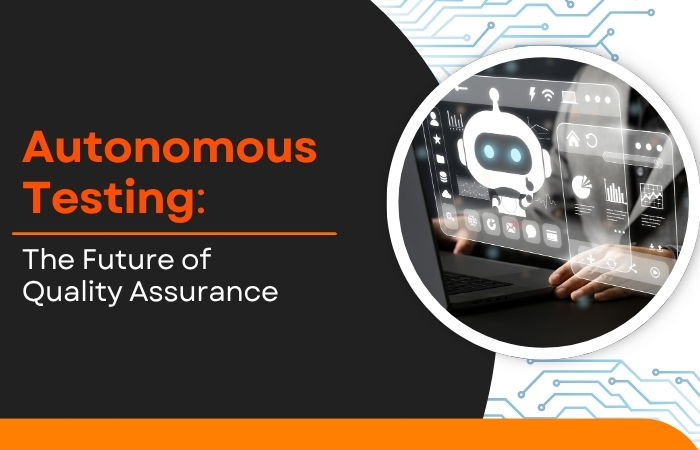
Autonomous Testing: Building Smarter Software Quality
Autonomous testing is changing the way organizations approach software quality. Learn how self-driven testing can improve efficiency, reduce test maintenance, and support faster release cycles while helping QA teams focus on complex quality and risk-based activities.
More details: https://publicsectornetwork.com/insight/autonomous-testing-the-future-of-quality-assurance
#AutonomousTesting, #QualityAssurance, #SoftwareTesting, #AutonomousTestinginQAAutonomous Testing: Building Smarter Software Quality Autonomous testing is changing the way organizations approach software quality. Learn how self-driven testing can improve efficiency, reduce test maintenance, and support faster release cycles while helping QA teams focus on complex quality and risk-based activities. More details: https://publicsectornetwork.com/insight/autonomous-testing-the-future-of-quality-assurance #AutonomousTesting, #QualityAssurance, #SoftwareTesting, #AutonomousTestinginQA
PUBLICSECTORNETWORK.COMAutonomous Testing: The Future of Quality AssuranceAutonomous software testing uses AI-driven, self-healing automation to adapt to frequent application changes, accelerate testing cycles, reduce maintenance, an…0 التعليقات 0 المشاركات 53 مشاهدة 0 معاينةالرجاء تسجيل الدخول , للأعجاب والمشاركة والتعليق على هذا! -
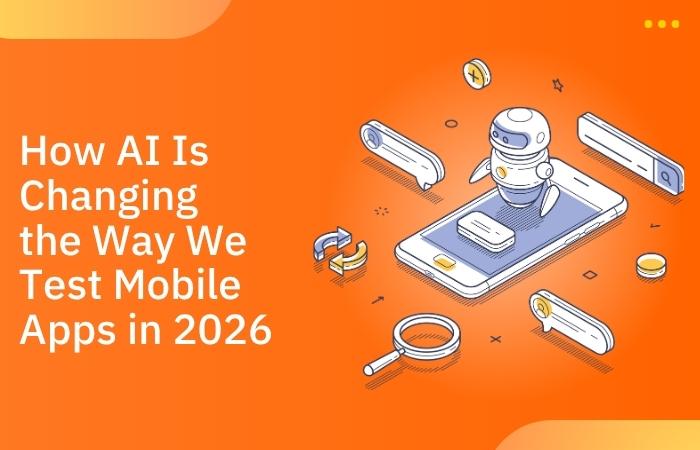
AI Trends Transforming Mobile App Testing
What does AI mean for the future of mobile app testing? Explore the key AI trends changing QA in 2026, from automated test creation and intelligent defect detection to self-healing automation and smarter testing strategies that accelerate releases.
Read More: https://my.ai.se/resources/how-ai-is-changing-the-way-we-test-mobile-apps-in-2026
#AIMobileAppTesting #MobileAppTesting #AIinMobileAppTesting #MobileApplicationTestingAI Trends Transforming Mobile App Testing What does AI mean for the future of mobile app testing? Explore the key AI trends changing QA in 2026, from automated test creation and intelligent defect detection to self-healing automation and smarter testing strategies that accelerate releases. Read More: https://my.ai.se/resources/how-ai-is-changing-the-way-we-test-mobile-apps-in-2026 #AIMobileAppTesting #MobileAppTesting #AIinMobileAppTesting #MobileApplicationTesting
MY.AI.SEHow AI Is Changing the Way We Test Mobile Apps in 2026If you had told me fifteen years ago, back when we were manually swapping SIM cards into a dozen different HTC and Nokia handsets just to test a basic login flow, that one day software would script itself, heal its own broken locators, and predict bugs before a line of code was even compiled, I would have laughed you out of the test lab. I have spent more than a decade and a half in the trenches of mobile QA. I lived through the shift from manual testing to early framework automation, witnessed the rise of responsive design, and suffered through the endless nightmare of fragmentation. Mobile app testing has always been a battle against time, hardware variations, and unpredictability. Now, in 2026, the industry is experiencing an irreversible shift driven by AI mobile app testing. The integration of artificial intelligence into QA pipelines has evolved from experimental pilot projects into the standard operating procedure for engineering teams. The era of intelligent test automation is here, permanently modifying the economics and execution of software quality assurance. The Persistent Friction Points of Traditional Mobile QA To understand why this shift is necessary, one must look at the structural failures of traditional mobile application testing methodologies. For years, QA teams have struggled under the weight of an expanding operational burden defined by specific market realities: Hard Fragmentation The Android and iOS ecosystems are totally dispersed throughout the world. Engineers are not only building software against a clear, consistent standard, but they are also working to support hundreds of active device configurations, individual chipset behaviours, different aspect ratios, and bespoke manufacturer skins. Physical device laboratories are a significant financial expense, and simple emulators often hide hardware-specific edge cases, requiring teams to run on large real-device clouds with complex orchestration. The Maintenance Loop Traditional automation frameworks like Appium or Espresso use strict object locators (IDs, XPaths, accessibility labels). In the fast development of today, developers regularly alter UI structure, component hierarchy, and underlying code to improve the functionality. A single front-end update invalidates hundreds of locators in a typical setup, which cascades into false positive test failures. An industry study indicates that QA teams spend up to 30% of their engineering cycles fixing failing scripts rather than expanding test coverage. Shorter Delivery Cycles The competitive environment requires continual deployment. Teams that used to ship monthly are now pushing builds multiple times a week, if not every day. If your regression suite takes 8 hours to execute on a typical device matrix, you have a huge bottleneck in your CI/CD workflow. It’s a painful trade-off: release late or compromise testing. Visual and Behavioral Variability Modern mobile applications are dynamic, customized, and loaded with rich media. Traditional assertion logic checks text strings or binary states, completely missing visual overlaps, clipped layout elements, rendering glitches, and localized content issues that destroy the user experience. The Core Pillars of AI-Powered Mobile Testing The application of machine learning, natural language processing, and advanced computer vision to QA automation directly addresses these bottlenecks. In 2026, AI mobile app testing operates across several foundational areas: Autonomous Test Generation Writing test scripts historically required deep programmatic knowledge of frameworks and execution models. Modern AI engines analyze application blueprints, user story documentation, and live user interaction patterns to autogenerate test scripts. By parsing natural language requirements, these platforms construct functional test paths, lowering technical entry barriers and enabling team members to design robust automation suites without manual coding. Self-Healing Test Scripts The most substantial operational improvement in 2026 is the elimination of the locator maintenance loop through self-healing mechanisms. Instead of relying on a single hardcoded element identifier, an AI-powered testing platform uses machine learning algorithms to evaluate dozens of attributes simultaneously, including relative screen position, visual appearance, parent-child object relationships, and historical properties. Intelligent Test Execution and Selection Running an entire regression suite on every single code commit is incredibly inefficient. AI-driven test optimization models inspect the exact diffs in recent code commits, map them against historical defect data, and calculate which specific code modules are highly susceptible to failure. The system then cherry-picks and executes only the highly relevant test cases for that specific code change. This risk-based test selection compresses regression testing cycles from hours down to minutes, delivering swift feedback loops within the CI/CD environment. Computer Vision and Visual AI Traditional pixel-to-pixel matching tools are notoriously unstable, flagging false positives for minor font rendering differences or layout shifts. Modern visual AI systems simulate human sight. They distinguish between acceptable layout fluidity across varying aspect ratios and actual visual bugs, such as blocked buttons, text overlaps, or broken graphical assets. This ensures perfect presentation across a massive variety of screen layouts without requiring thousands of rigid visual assertions. Predictive Bug Analytics By evaluating historical execution logs, code repository trends, and project management data, predictive models identify high-risk areas within an application architecture. If a specific payment gateway module has historically produced bugs whenever the underlying data structure updates, the AI mobile testing engine highlights this pattern, alerting the engineering team to focus additional exploratory testing on that component before deployment. Implementation Best Practices for Engineering Teams Adopting AI mobile app testing within a QA organization requires a deliberate strategy. Teams cannot simply purchase an enterprise AI tool, point it at a repository, and expect perfect results. For groups looking to structure their internal pipelines around machine-driven verification models, reviewing targeted guidelines on AI-automated mobile app testing provides an actionable baseline for continuous integration. Success depends on adhering to structured deployment principles: Use an Incremental Strategy: Don't think you can fully automate your entire testing infrastructure in one day. Decide on a difficult, high-value regression test/regression path that is high in the number of repetitions or is fragile and prone to flakiness, and demonstrate that this AI tool is effective there, before implementing it enterprise-wide! Focus on Training Data Quality: Machine learning algorithms are only as effective as the data they are trained on. To ensure the accuracy of predictions and self-healing in AI systems, teams are required to submit well-structured test cases, execution history, and well-triaged bug reports. Keep Human Oversight: AI tools can be used to increase productivity, but they should not make decisions. AI-generated scripts must be audited by engineering teams regularly, checked for highlighted visual issues, and analyzed for bug predictions to ensure that any systematical errors or misleading assumptions are not found in the pipeline. Early in the CI/CD: To leverage advanced validation technologies for their full economic value, start using these technologies directly in your continuous integration and continuous delivery (CI/CD) pipelines. Optimized regression scripts are executed immediately on developer pull requests, remediation costs are lowered, and issues are caught early. Evaluating the Limitations of Modern AI in QA Despite these major technological advancements, AI mobile app testing is not a magic solution that replaces human intelligence. Veteran QA professionals recognize specific boundaries where human intuition remains absolutely indispensable: Exploratory Testing and Intuition: AI will perform processes using patterns, requirements, and structural data. It cannot reproduce the chaotic, inventive, and unexpected behavior of a human user trying to disrupt an interface. It also lacks the contextual understanding of a human. Nuanced Usability Assessment: A machine can check that a user interface conforms to design layouts and passes functional tests, but it cannot determine if an actual human finds an application intuitive, rewarding, or frustrating. The Cold Start Challenge: When developing a totally unique feature or pioneering a brand-new interface paradigm, historical data is non-existent. In these scenarios, the training models lack the reference material needed to generate meaningful test scripts or predictions without significant initial human setup. Looking Ahead: The Future Balance of Mobile Quality Assurance Mobile tech is changing so rapidly there’s just no place for cumbersome, antiquated verification methods. “Organizations that are still on legacy, manually driven frameworks will be left behind by competitors that are leveraging predictive insights and automated script adaptation. The goal of incorporating artificial intelligence into software validation operations is not to take human engineers out of the loop. Rather, it’s about eliminating the dull, repetitive processes that kill engineering velocity, such as manually chasing down failed locators, monitoring hardware lab setups, and repeating the same full-suite regression pathways for trivial text updates. This frees up QA personnel to concentrate on high-impact exploratory testing, security analysis, and strategic performance engineering, rather than tedious, data-heavy activities being handed off to machine learning models. The future of AI mobile app testing will belong to those teams who effectively combine human inventiveness with the speed and scale of modern machine automation.0 التعليقات 0 المشاركات 164 مشاهدة 0 معاينة -
Build Stronger Security With Testing
Strengthen your security strategy with cybersecurity testing for organizations. Learn how different testing techniques can help identify vulnerabilities, mitigate cyber threats, protect sensitive information, and improve the security of digital applications.
Find more: https://www.gadget-rumours.com/cybersecurity-testing-techniques-for-organizations/
#CybersecurityTesting, #CyberSecurityForOrganizations, #SecurityTesting, #SoftwareTesting, #ApplicationSecurityBuild Stronger Security With Testing Strengthen your security strategy with cybersecurity testing for organizations. Learn how different testing techniques can help identify vulnerabilities, mitigate cyber threats, protect sensitive information, and improve the security of digital applications. Find more: https://www.gadget-rumours.com/cybersecurity-testing-techniques-for-organizations/ #CybersecurityTesting, #CyberSecurityForOrganizations, #SecurityTesting, #SoftwareTesting, #ApplicationSecurity
WWW.GADGET-RUMOURS.COMCybersecurity Testing Techniques for OrganizationsModern cybersecurity requires more than periodic audits and perimeter defenses. This guide explores key cybersecurity testing methodologies, including SAST, DAST, SCA, API security testing, penetration testing, and cloud security validation, along with practical steps for building a proactive DevSecOps security strategy.0 التعليقات 0 المشاركات 143 مشاهدة 0 معاينة -
Why AI Matters in Modern Cybersecurity Testing
Learn why AI is becoming an important part of modern cybersecurity testing. From identifying vulnerabilities to automating security checks and analyzing threats, AI helps security teams improve testing speed, coverage, and accuracy while building stronger protection against emerging cyber threats.
Visit: https://www.articlesreader.com/the-role-of-ai-in-modern-cybersecurity-testing/
#CybersecurityTesting, #SecurityTesting, #AIinSecurityTesting, #AIsecurityTestingWhy AI Matters in Modern Cybersecurity Testing Learn why AI is becoming an important part of modern cybersecurity testing. From identifying vulnerabilities to automating security checks and analyzing threats, AI helps security teams improve testing speed, coverage, and accuracy while building stronger protection against emerging cyber threats. Visit: https://www.articlesreader.com/the-role-of-ai-in-modern-cybersecurity-testing/ #CybersecurityTesting, #SecurityTesting, #AIinSecurityTesting, #AIsecurityTesting0 التعليقات 0 المشاركات 280 مشاهدة 0 معاينة -
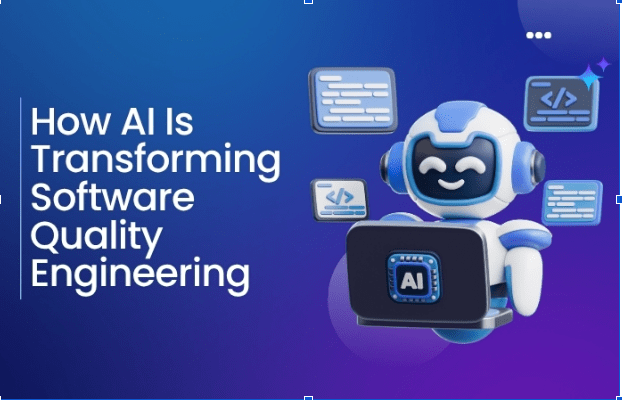
The Future of Software Quality Engineering with AI
Explore how AI in software testing helps QA teams move beyond traditional testing with intelligent automation, dynamic locators, predictive testing, and AI-powered test generation. Understand the key benefits, challenges, and roadmap for adopting AI in modern quality engineering.
Visit: https://www.etc-expo.com/how-ai-is-transforming-software-quality-engineering/
#AIinSoftwareTesting, #SoftwareTesting, #QualityEngineering, #AITesting, #TestAutomation, #SoftwareQualityThe Future of Software Quality Engineering with AI Explore how AI in software testing helps QA teams move beyond traditional testing with intelligent automation, dynamic locators, predictive testing, and AI-powered test generation. Understand the key benefits, challenges, and roadmap for adopting AI in modern quality engineering. Visit: https://www.etc-expo.com/how-ai-is-transforming-software-quality-engineering/ #AIinSoftwareTesting, #SoftwareTesting, #QualityEngineering, #AITesting, #TestAutomation, #SoftwareQuality
WWW.ETC-EXPO.COMHow AI Is Transforming Software Quality EngineeringSoftware quality engineering faces an unprecedented operational shift as enterprise deployment cycles accelerate from months to daily releases. Quality assurance teams can no longer maintain delivery velocity using legacy manual execution or brittle automation scripts. Integrating AI in software testing frameworks converts quality management from an execution bottleneck into a strategic business driver. Enterprise leaders0 التعليقات 0 المشاركات 156 مشاهدة 0 معاينة -
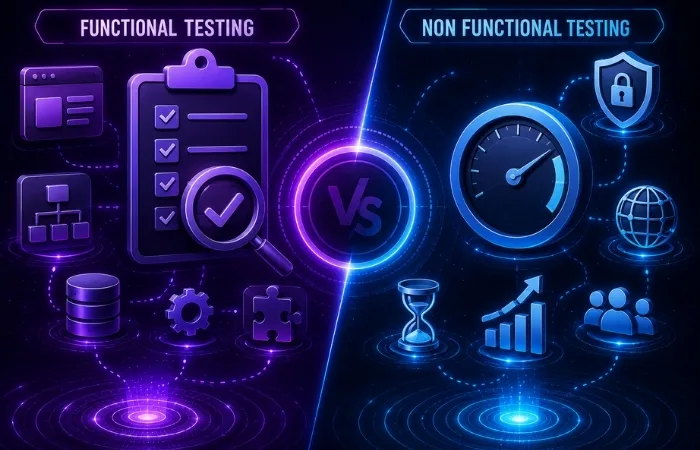
Functional and Non-Functional Testing Explained for QA Teams
Functional and non-functional testing address different aspects of software quality. Explore their differences, objectives, testing techniques, examples, and benefits in this practical guide designed to help QA teams choose the right testing approach for reliable, high-performing applications.
Know more: https://froodl.com/functional-vs-non-functional-testing-a-complete-guide-for-qa-teamsFunctional and Non-Functional Testing Explained for QA Teams Functional and non-functional testing address different aspects of software quality. Explore their differences, objectives, testing techniques, examples, and benefits in this practical guide designed to help QA teams choose the right testing approach for reliable, high-performing applications. Know more: https://froodl.com/functional-vs-non-functional-testing-a-complete-guide-for-qa-teams
FROODL.COMFunctional vs. Non-Functional Testing: A Complete Guide for QA TeamsA newly deployed checkout feature might look visually flawless and process a single test payment without a hitch. But what happens when five thousand users attempt to complete a purchase during a flas0 التعليقات 0 المشاركات 50 مشاهدة 0 معاينة -
Why Website Security Testing Matters for SEO
Website security and search visibility are closely connected. Discover how hacked pages, malicious redirects, phishing scripts, and malware can affect organic traffic and how continuous security testing can help prevent these risks.
Know more: https://www.webtrafficexchange.com/blog/how-security-testing-protects-your-website-reputation-and-search-visibilityWhy Website Security Testing Matters for SEO Website security and search visibility are closely connected. Discover how hacked pages, malicious redirects, phishing scripts, and malware can affect organic traffic and how continuous security testing can help prevent these risks. Know more: https://www.webtrafficexchange.com/blog/how-security-testing-protects-your-website-reputation-and-search-visibilityHow Security Testing Protects Your Website, Reputation, and Search VisibilityWebsite security testing finds vulnerabilities before attackers, protecting user data, brand reputation, and search visibility.0 التعليقات 0 المشاركات 71 مشاهدة 0 معاينة -
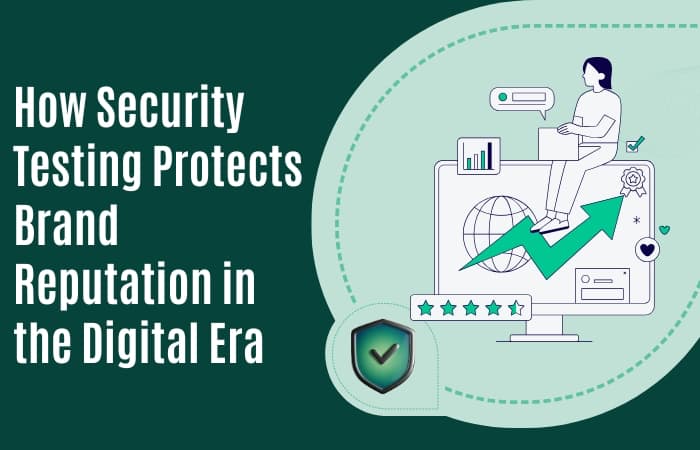
Security Testing and the Future of Digital Trust
Digital trust depends on secure and reliable online experiences. Learn how security testing can uncover weaknesses, strengthen application security, minimize cyber risks, and help businesses protect their reputation in an increasingly connected world.
Know more: https://wittysparks.com/security-testing-protects-brand-reputation/
#SecurityTesting, #WebsiteSecurityTesting, #CyberSecurity, #WebsiteSecurity, #ApplicationSecurity, #BrandReputation, #DataSecuritySecurity Testing and the Future of Digital Trust Digital trust depends on secure and reliable online experiences. Learn how security testing can uncover weaknesses, strengthen application security, minimize cyber risks, and help businesses protect their reputation in an increasingly connected world. Know more: https://wittysparks.com/security-testing-protects-brand-reputation/ #SecurityTesting, #WebsiteSecurityTesting, #CyberSecurity, #WebsiteSecurity, #ApplicationSecurity, #BrandReputation, #DataSecurity
WITTYSPARKS.COMHow Security Testing Protects Brand Reputation in the Digital Era?Discover how proactive security testing safeguards brand reputation, prevents data breaches, ensures compliance, and protects customer trust across modern digital systems.0 التعليقات 0 المشاركات 204 مشاهدة 0 معاينة -
Build a Strong Security Testing Checklist
Discover the essential steps for creating a practical security testing checklist. Learn how to evaluate application vulnerabilities, authentication mechanisms, access controls, sensitive data protection, and security configurations for stronger application protection.
Visit: https://www.techcrackblog.com/2026/08/how-to-build-security-testing-checklist.htmlBuild a Strong Security Testing Checklist Discover the essential steps for creating a practical security testing checklist. Learn how to evaluate application vulnerabilities, authentication mechanisms, access controls, sensitive data protection, and security configurations for stronger application protection. Visit: https://www.techcrackblog.com/2026/08/how-to-build-security-testing-checklist.html
WWW.TECHCRACKBLOG.COMHow to Build a Security Testing Checklist for SaaS ProductsTechCrack is the destination to update you about New Technology, How To, Apps, Gadgets, Cyber Security, BizTech, MarTech, and much more...0 التعليقات 0 المشاركات 104 مشاهدة 0 معاينة -
A Practical Guide to LLM Testing in CI/CD Pipelines
Discover practical approaches to testing large language models throughout the CI/CD lifecycle. Learn how automated validation, prompt evaluation, regression testing, and performance monitoring can help maintain AI quality while accelerating software delivery.
Read more: https://dzone.com/articles/llm-testing-cicd
#LLM #LLMTesting #AITesting #AIQuality #PromptEngineering #CI_CD #DevOps #ContinuousIntegration #ContinuousDelivery #SoftwareQualityA Practical Guide to LLM Testing in CI/CD Pipelines Discover practical approaches to testing large language models throughout the CI/CD lifecycle. Learn how automated validation, prompt evaluation, regression testing, and performance monitoring can help maintain AI quality while accelerating software delivery. Read more: https://dzone.com/articles/llm-testing-cicd #LLM #LLMTesting #AITesting #AIQuality #PromptEngineering #CI_CD #DevOps #ContinuousIntegration #ContinuousDelivery #SoftwareQuality0 التعليقات 0 المشاركات 463 مشاهدة 0 معاينة
المزيد من المنشورات