PaySocial | Monetize your skills and share your projects

Search

Discover new people, create new connections and make new friends

  • Discover what affects Streaming News API latency, from article discovery to delivery. Learn how WebSocket streaming reduces polling delays, improves real-time news delivery, and helps developers build faster news alerts, live dashboards, and monitoring tools.

    Click for more info: https://newsdata.io/blog/streaming-news-api-latency/

    #News #Developers #API #Tools #Technology
    NEWSDATA.IO
    Streaming News API Latency: What Determines Delivery Speed? - Newsdata.io - Stay Updated with the Latest News API Trends
    How fast does a streaming news API deliver articles? Learn what drives real-time news API latency and how NewsData.io cuts delays.
    Like
    1
    126 Views
  • Paracetamol prices reflect changing pharmaceutical demand, raw material costs, and global supply conditions. Market movements are influenced by p-aminophenol availability, manufacturing expenses, export demand, and inventory levels. Supply disruptions and freight fluctuations can create price volatility, while stable production and competitive sourcing may moderate prices across major pharmaceutical markets worldwide.


    Read Full Report: https://www.price-watch.ai/paracetamol-prices/


    #ParacetamolPriceTrend #ParacetamolPrices #PharmaceuticalMarket #APIPriceTrend #ChemicalMarket #MarketInsights
    Paracetamol (Acetaminophen)
    Paracetamol (acetaminophen) price trend analysis, pricing forecast, price chart, price index, price outlook, historical and future prices.
    139 Views
  • Barite Market Growth, Demand, and Future Trends Report by MMR

    Barite Market to Reach USD 2.16 Billion by 2032, Driven by Rising Oil & Gas Exploration and Industrial Applications

    The Barite Market is witnessing steady growth, supported by increasing oil and gas exploration activities, rising demand for high-performance drilling fluids, and expanding industrial applications. According to Maximize Market Research, the Barite Market was valued at USD 1.45 billion in 2025 and is expected to grow at a CAGR of 5.88% during the forecast period from 2026 to 2032, reaching approximately USD 2.16 billion by 2032.

    Barite, also known as barium sulfate, is an important industrial mineral recognized for its high specific gravity, chemical stability, and resistance to chemical reactions. It is extensively used in oil and gas drilling fluids to control underground pressure and maintain wellbore stability. Additionally, its applications in paints, coatings, plastics, rubber, pharmaceuticals, and radiation shielding are creating further opportunities for market expansion.

    Market Estimation, Growth Drivers and Opportunities

    The global Barite Market is projected to experience consistent expansion as energy companies increase investments in exploration and production activities. Barite plays an essential role in drilling mud formulations because its high density helps control formation pressure, prevent blowouts, and improve drilling safety. Growing offshore exploration, unconventional oil and gas production, and increasing drilling activities across major energy-producing countries are expected to support market demand.

    Another important growth driver is the increasing use of barite in industrial manufacturing. Its chemical inertness and density make it suitable for applications in paints, coatings, plastics, rubber products, and soundproofing materials. Furthermore, growing demand for barium-based compounds and medical imaging materials is creating opportunities for specialized, high-purity barite products.

    Market participants can benefit from investments in advanced mineral processing, improved grinding technologies, efficient transportation networks, and sustainable mining operations. Developing high-quality barite grades and strengthening supply chains will also create opportunities for manufacturers during the forecast period.

    Get Your Free Sample Report Link : https://www.maximizemarketresearch.com/request-sample/13069/

    US Market Trends and Investment Outlook

    The United States remains an important market for barite because of its established oil and gas industry, particularly shale exploration and drilling operations in regions such as the Permian Basin. In 2025, developments in drilling-fluid recovery and recycling highlighted the industry's increasing focus on operational efficiency and resource conservation. SLB launched an advanced drilling-fluid recycling facility in the Permian Basin in January 2025, designed to recover and reuse API-grade barite from used drilling muds. This development supports reduced material waste and lower raw-material costs for oilfield operations. Additionally, growing interest in domestic mineral supply chains and continued investment in energy infrastructure are expected to strengthen demand for reliable barite supplies.

    Market Segmentation: Grade 4.1 and Grey Barite Lead

    Based on grade, Grade 4.1 represents a leading segment of the global Barite Market, accounting for approximately 30% market share. Its popularity is supported by its suitability for oilfield drilling applications, where consistent density and quality are essential for maintaining drilling-fluid performance.

    Based on color, grey barite dominated the market in 2025 due to its widespread availability, cost-effectiveness, and suitability for drilling mud applications. Its relatively lower processing costs compared with premium white and blue grades further strengthen its market position.

    Based on deposit type, bedding deposits held the largest market share because of their extensive reserves, continuous mineral availability, and economic suitability for large-scale extraction.

    Based on end-user, the oil and gas segment dominated the market. Barite is extensively consumed in drilling fluids to increase mud density, control underground pressure, and improve drilling efficiency. Continued exploration and production investments are expected to maintain this segment's leading position.
    152 Views
  • Turn your business ideas into practical software solutions with SynapseIndia’s Python App Development Services. From custom applications to API integrations and feature enhancements, we build solutions around your business needs. Contact us today to discuss your project!
    Visit us: https://www.synapseindia.com/technology/python-development-company.html
    #SynapseIndia #PythonDevelopment
    68 Views
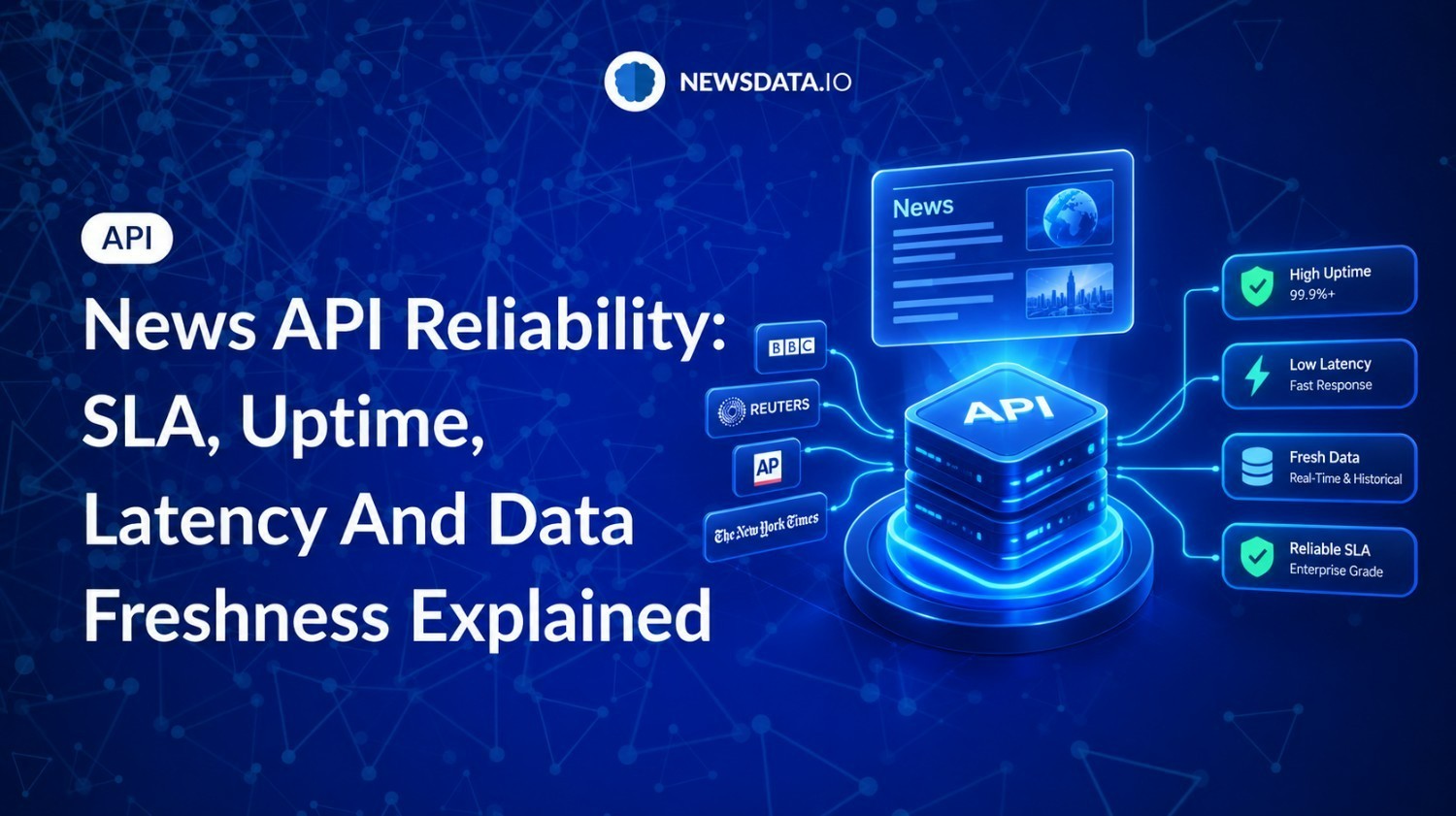
  • Is your news API delivering fresh, reliable data? Explore how SLA, uptime, latency, and data freshness affect your news feed, and learn what developers should check before choosing a reliable News API for their apps.

    More info: https://newsdata.io/blog/news-api-reliability/

    #News #API #Developers #Buy #Best #Top #custom
    NEWSDATA.IO
    News API Reliability: SLA, Uptime, Latency And Data Freshness Explained
    Explore News API reliability: SLA, uptime, latency, and data freshness. See how NewsData.io's Streaming News API delivers news in real time.
    Like
    1
    133 Views
  • Build web applications that fit your business needs with SynapseIndia’s Laravel web application development services. From custom features to API integrations, we develop solutions around your goals. Contact us today to discuss your project!
    Know more: https://www.synapseindia.com/technology/laravel-development-company.html
    #LaravelDevelopment #SynapseIndia
    110 Views
  • Banking System Software Market Top Companies and Competitive Landscape Report by MMR

    Banking System Software Market to Reach US$ 60.18 Billion by 2034, Driven by Digital Transformation and AI Innovation

    The Banking System Software Market is witnessing steady growth as financial institutions accelerate digital transformation, modernize legacy banking infrastructure, and adopt advanced technologies to improve operational efficiency. According to Maximize Market Research, the market is expected to reach US$ 60.18 billion by 2034, expanding at a compound annual growth rate (CAGR) of 5.98% during the forecast period. Growing demand for secure digital transactions, real-time payment processing, cloud-based platforms, and personalized banking services is creating significant opportunities for software providers worldwide.

    Market Estimation, Growth Drivers, and Opportunities

    Banking system software supports essential financial operations, including account management, transaction processing, payment services, lending, customer relationship management, and regulatory reporting. As customers increasingly prefer mobile banking and online financial services, banks are investing in flexible software platforms capable of processing transactions efficiently while maintaining high security standards.

    A major growth driver is the modernization of legacy banking systems. Traditional infrastructure can limit innovation, increase maintenance expenses, and complicate integration with emerging financial technologies. Modern software enables financial institutions to streamline workflows, improve data management, and introduce new services more rapidly. Artificial intelligence (AI), machine learning, application programming interfaces (APIs), and cloud computing are further expanding the market's growth potential.

    Additional opportunities are emerging from fraud detection, automated compliance monitoring, open banking, digital lending, and real-time payments. Software vendors that deliver scalable, interoperable, and secure solutions are well positioned to benefit from banks' long-term technology investments. However, cybersecurity threats, integration challenges, regulatory requirements, and the cost of replacing established systems remain important considerations for market participants.

    Request Your Sample Market Report PDF : https://www.maximizemarketresearch.com/request-sample/16011/
    166 Views
  • Southeast Asia Sulfurous Oxychloride Market to Reach USD 103.0 Million by 2034 at 6.5% CAGR as Pharmaceutical and Agrochemical Manufacturing Expands

    View the complete report: https://www.24chemicalresearch.com/reports/275242/asia-southeast-sulfurous-oxychloride-market

    Growing demand for high-purity chemical reagents, expanding API production, and advancements in specialty-chemical applications are shaping the regional market landscape. Indonesia leads the market, while Vietnam is emerging as a key growth region amid evolving manufacturing capabilities and regulatory requirements.
    286 Views
  • News APIs are shifting from headline feeds to real-time intelligence infrastructure. A Streaming News API pushes articles the instant they are published, powering alerts, dashboards, and AI tools. Learn how WebSocket streaming beats REST polling and how NewsData.io delivers it across 100,000+ sources.

    Click for more info: https://newsdata.io/blog/news-api-intelligence/

    #News #Data #AI #tools #business #API
    NEWSDATA.IO
    Why Are News APIs Becoming Real-Time Intelligence Infrastructure?
    A Streaming News API turns headlines into live intelligence. See why news intelligence infrastructure matters and how NewsData.io delivers it.
    126 Views
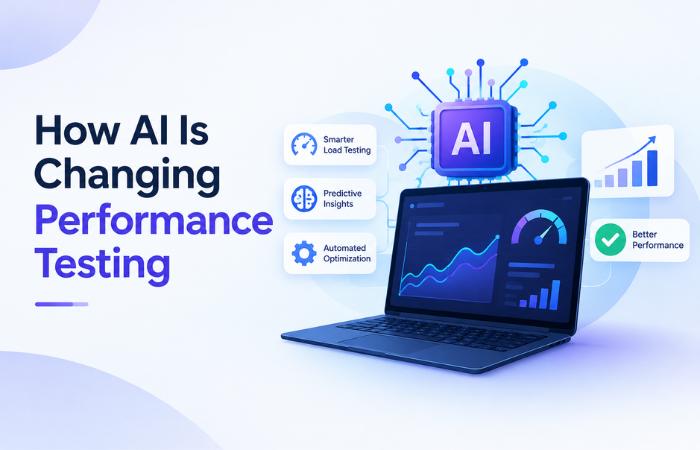
  • Explore the latest trends in AI-powered performance testing and how intelligent automation, anomaly detection, and predictive insights help identify performance issues earlier. Discover practical ways to optimize application performance, reduce testing effort, and support faster releases.

    Find more: https://my.ai.se/resources/how-ai-is-changing-performance-testing

    #PerformanceTesting #AIPerformanceTesting #LoadTesting
    MY.AI.SE
    How AI Is Changing Performance Testing
    Performance testing has always been about answering practical questions. How many users can the application support? What happens when traffic spikes? Which component becomes the bottleneck first? How quickly does the system recover once the load drops? Those questions have not changed. The way teams answer them is starting to. Traditional performance testing relies heavily on scripted workloads, predefined thresholds, monitoring tools, and manual analysis. That still works, but modern applications have become harder to read. Microservices, cloud infrastructure, APIs, databases, queues, third-party services, and distributed architectures can all contribute to one slow transaction. This is where AI performance testing is beginning to make a difference. From Static Load Profiles to Smarter Workloads A standard performance test often starts with a predefined load model. For example, 500 users log in, 200 browse products, 100 add items to cart, and 50 complete checkout. That is useful, but production traffic rarely behaves so neatly. User behavior changes by time of day, geography, campaigns, devices, and feature usage. A flash sale may create a very different traffic pattern from a normal weekday. Some workflows may spike while others remain steady. AI-powered performance testing can help build workload models from real usage patterns rather than relying only on manually designed scenarios. Historical traffic, transaction volumes, user journeys, and incident data can all be used to identify what a realistic stress pattern should look like. That makes the test closer to the way the system is actually used. AI Makes Bottleneck Analysis Faster Running a load test is often the easy part. The harder part begins when response time jumps from 400 milliseconds to four seconds and the team needs to figure out why. Was it the database? A slow API? Thread exhaustion? Memory pressure? A downstream service? Network latency? A cloud autoscaling delay? In a distributed system, the answer may involve several of these at once. AI can help correlate metrics across logs, traces, infrastructure, and application performance data to narrow down the likely source of degradation. Instead of manually reviewing dozens of dashboards, engineers can use AI-assisted analysis to identify recurring patterns and suspicious relationships. This is where performance engineering benefits most: not from automating the test itself, but from reducing the time between “something slowed down” and “this is probably where the problem is.” Performance Testing Automation Is Becoming More Adaptive Automation in performance testing is not new. Teams have been running load tests inside CI/CD pipelines for years. What is changing is how those tests are selected and interpreted. A traditional pipeline may run the same suite after every major build. An AI-assisted system can be more selective. If a release touches only a payment service, the system may prioritize payment-heavy scenarios. If a previous deployment caused memory issues under sustained load, that pattern can be given more weight in future runs. This makes performance testing automation more responsive to actual release risk. The goal is not necessarily to run fewer tests. It is to run the ones that are most useful at that moment. Anomaly Detection Is One of the Strongest Use Cases Performance degradation is not always dramatic. A page may become 8% slower after one release, then another 6% slower later. Neither change looks serious in isolation, but together they point to a trend. AI-based anomaly detection is well suited to finding these gradual shifts. It can compare current results against historical baselines and flag behavior that falls outside the normal range, even if the system has not crossed a hard threshold. That is particularly useful in cloud environments where normal performance may vary depending on traffic, resource allocation, & infrastructure conditions. AI Workload Testing Can Improve Capacity Planning Capacity planning often depends on historical data & projected business growth. AI workload testing can help generate and compare scenarios that would be tedious to model manually. This is useful when teams need to prepare for events such as product launches, sales campaigns, onboarding spikes, or geographic expansion. It does not eliminate the need for actual load testing, but it can make those tests better targeted. Tools Still Matter AI does not remove the need for established performance testing tools. Teams still need reliable ways to generate load, measure latency, monitor infrastructure, trace requests, and validate system behavior under pressure. The tool choice depends on architecture, protocols, scalability requirements, scripting needs, & how deeply the test needs to integrate with CI/CD. For teams comparing options, this overview of performance testing tools is a useful place to evaluate the strengths and trade-offs of commonly used platforms. AI is increasingly becoming another layer on top of that tooling rather than a replacement for it. There Are Limits to What AI Can Infer AI-assisted analysis is useful, but teams should be careful about treating every recommendation as fact. A model may identify correlation without proving causation. It may flag one service as suspicious when the real issue originates elsewhere. Poor monitoring data can also lead to poor conclusions. That means engineers still need to validate the diagnosis. Performance problems are often architectural. Understanding caching, concurrency, network behavior, database design, and service dependencies still requires technical judgment. AI can accelerate investigation, but it cannot compensate for weak observability or incomplete test design. Performance Testing Is Becoming More Predictive The biggest change is that AI testing is moving performance work away from purely reactive analysis. Traditional testing often asks, “What broke under load?” AI-assisted approaches can also ask, “What is likely to break next?” That shift matters. By combining historical failures, traffic patterns, release changes, anomaly detection, and infrastructure data, teams can make better decisions about where to focus testing before performance problems reach production. The fundamentals remain the same: apply realistic load, measure the system, identify bottlenecks, and fix them. What AI changes is how quickly teams can get from raw performance data to useful engineering decisions.
    210 Views
More Results
© 2026 PaySocial | Monetize your skills and share your projects