PaySocial | Monetize your skills and share your projects

Search

Discover new people, create new connections and make new friends

  • A Guide to Enterprise Test Automation Tool Selection
    Choosing an automation tool involves more than comparing features. Learn how to assess enterprise testing requirements, evaluate automation frameworks, measure scalability, and identify tools that support faster releases, consistent test execution, and improved software quality.

    Visit: https://mindxmaster.com/how-to-choose-the-right-test-automation-tools-for-enterprise-software/
    #TestAutomationTool #TestAutomationSolution #EnterpriseTestAutomationTool #AutomationTool
    MINDXMASTER.COM
    How to Choose the Right Test Automation Tools for Enterprise Software - MindxMaster
    How to choose test automation tools for enterprise software: maintenance, team fit, CI/CD integration, and pilot tips.
    108 Views
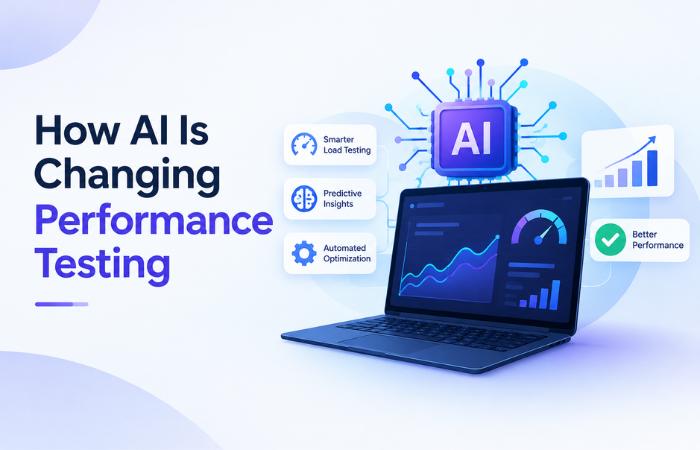
  • Explore the latest trends in AI-powered performance testing and how intelligent automation, anomaly detection, and predictive insights help identify performance issues earlier. Discover practical ways to optimize application performance, reduce testing effort, and support faster releases.

    Find more: https://my.ai.se/resources/how-ai-is-changing-performance-testing

    #PerformanceTesting #AIPerformanceTesting #LoadTesting
    MY.AI.SE
    How AI Is Changing Performance Testing
    Performance testing has always been about answering practical questions. How many users can the application support? What happens when traffic spikes? Which component becomes the bottleneck first? How quickly does the system recover once the load drops? Those questions have not changed. The way teams answer them is starting to. Traditional performance testing relies heavily on scripted workloads, predefined thresholds, monitoring tools, and manual analysis. That still works, but modern applications have become harder to read. Microservices, cloud infrastructure, APIs, databases, queues, third-party services, and distributed architectures can all contribute to one slow transaction. This is where AI performance testing is beginning to make a difference. From Static Load Profiles to Smarter Workloads A standard performance test often starts with a predefined load model. For example, 500 users log in, 200 browse products, 100 add items to cart, and 50 complete checkout. That is useful, but production traffic rarely behaves so neatly. User behavior changes by time of day, geography, campaigns, devices, and feature usage. A flash sale may create a very different traffic pattern from a normal weekday. Some workflows may spike while others remain steady. AI-powered performance testing can help build workload models from real usage patterns rather than relying only on manually designed scenarios. Historical traffic, transaction volumes, user journeys, and incident data can all be used to identify what a realistic stress pattern should look like. That makes the test closer to the way the system is actually used. AI Makes Bottleneck Analysis Faster Running a load test is often the easy part. The harder part begins when response time jumps from 400 milliseconds to four seconds and the team needs to figure out why. Was it the database? A slow API? Thread exhaustion? Memory pressure? A downstream service? Network latency? A cloud autoscaling delay? In a distributed system, the answer may involve several of these at once. AI can help correlate metrics across logs, traces, infrastructure, and application performance data to narrow down the likely source of degradation. Instead of manually reviewing dozens of dashboards, engineers can use AI-assisted analysis to identify recurring patterns and suspicious relationships. This is where performance engineering benefits most: not from automating the test itself, but from reducing the time between “something slowed down” and “this is probably where the problem is.” Performance Testing Automation Is Becoming More Adaptive Automation in performance testing is not new. Teams have been running load tests inside CI/CD pipelines for years. What is changing is how those tests are selected and interpreted. A traditional pipeline may run the same suite after every major build. An AI-assisted system can be more selective. If a release touches only a payment service, the system may prioritize payment-heavy scenarios. If a previous deployment caused memory issues under sustained load, that pattern can be given more weight in future runs. This makes performance testing automation more responsive to actual release risk. The goal is not necessarily to run fewer tests. It is to run the ones that are most useful at that moment. Anomaly Detection Is One of the Strongest Use Cases Performance degradation is not always dramatic. A page may become 8% slower after one release, then another 6% slower later. Neither change looks serious in isolation, but together they point to a trend. AI-based anomaly detection is well suited to finding these gradual shifts. It can compare current results against historical baselines and flag behavior that falls outside the normal range, even if the system has not crossed a hard threshold. That is particularly useful in cloud environments where normal performance may vary depending on traffic, resource allocation, & infrastructure conditions. AI Workload Testing Can Improve Capacity Planning Capacity planning often depends on historical data & projected business growth. AI workload testing can help generate and compare scenarios that would be tedious to model manually. This is useful when teams need to prepare for events such as product launches, sales campaigns, onboarding spikes, or geographic expansion. It does not eliminate the need for actual load testing, but it can make those tests better targeted. Tools Still Matter AI does not remove the need for established performance testing tools. Teams still need reliable ways to generate load, measure latency, monitor infrastructure, trace requests, and validate system behavior under pressure. The tool choice depends on architecture, protocols, scalability requirements, scripting needs, & how deeply the test needs to integrate with CI/CD. For teams comparing options, this overview of performance testing tools is a useful place to evaluate the strengths and trade-offs of commonly used platforms. AI is increasingly becoming another layer on top of that tooling rather than a replacement for it. There Are Limits to What AI Can Infer AI-assisted analysis is useful, but teams should be careful about treating every recommendation as fact. A model may identify correlation without proving causation. It may flag one service as suspicious when the real issue originates elsewhere. Poor monitoring data can also lead to poor conclusions. That means engineers still need to validate the diagnosis. Performance problems are often architectural. Understanding caching, concurrency, network behavior, database design, and service dependencies still requires technical judgment. AI can accelerate investigation, but it cannot compensate for weak observability or incomplete test design. Performance Testing Is Becoming More Predictive The biggest change is that AI testing is moving performance work away from purely reactive analysis. Traditional testing often asks, “What broke under load?” AI-assisted approaches can also ask, “What is likely to break next?” That shift matters. By combining historical failures, traffic patterns, release changes, anomaly detection, and infrastructure data, teams can make better decisions about where to focus testing before performance problems reach production. The fundamentals remain the same: apply realistic load, measure the system, identify bottlenecks, and fix them. What AI changes is how quickly teams can get from raw performance data to useful engineering decisions.
    258 Views
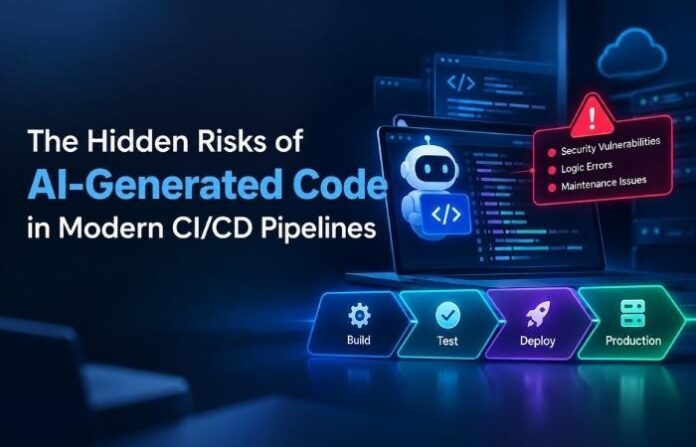
  • AI-generated code offers speed and efficiency, but it can also introduce defects that compromise software quality and pipeline security. Understand the challenges of validating AI-written code and discover how proactive testing and security validation help teams reduce risks before deployment.

    Also read: https://technologicz.com/the-hidden-risks-of-ai-generated-code-in-modern-ci-cd-pipelines/

    #AIGeneratedCode, #CICDPipeline, #SoftwareTesting, #ApplicationSecurity, #DevSecOps
    TECHNOLOGICZ.COM
    The Hidden Risks of AI-Generated Code in Modern CI/CD Pipelines
    The utilization of artificial intelligence coding assistants has shifted from experimental autocomplete scripts to an integrated component of the software development lifecycle.
    283 Views
  • DevOps Managed Services in UK for Reliable IT Operations
    DevOps Managed Services in UK help businesses manage software development, cloud infrastructure, deployment, and IT operations through automation and modern DevOps practices. These services can help organizations streamline development workflows, improve deployment processes, and maintain reliable technology environments.
    DevOps managed services can include continuous integration and continuous delivery (CI/CD), cloud infrastructure management, infrastructure automation, container management, configuration management, application deployment, monitoring, and security. Experienced DevOps professionals can help businesses design and manage processes that connect development and operations teams.
    A reliable provider of DevOps Managed Services in UK can implement automation across different stages of the software development lifecycle. Automated testing, deployment, infrastructure provisioning, and configuration management can reduce repetitive manual tasks and improve consistency. CI/CD pipelines can also help teams manage software releases in a more structured way.
    Monitoring and performance management are important parts of managed DevOps services. Continuous monitoring can help identify application, infrastructure, and performance issues. DevOps teams can also integrate security practices into development and deployment workflows to support a more secure software delivery process.
    DevOps Managed Services in UK can benefit startups, small businesses, and enterprises across industries such as IT, finance, healthcare, retail, education, manufacturing, and telecommunications. Businesses can receive ongoing technical support while reducing the workload on their internal development and operations teams.
    Managed DevOps services can also support cloud environments by helping organizations manage infrastructure, automate processes, and scale resources according to changing requirements. This can help businesses maintain efficient and flexible IT operations as their applications and workloads grow.
    Choosing suitable DevOps Managed Services in UK can help organizations streamline software delivery, improve operational efficiency, automate IT processes, and maintain a scalable technology environment that supports long-term digital growth.
    407 Views
  • AI Trends Transforming Mobile App Testing

    What does AI mean for the future of mobile app testing? Explore the key AI trends changing QA in 2026, from automated test creation and intelligent defect detection to self-healing automation and smarter testing strategies that accelerate releases.

    Read More: https://my.ai.se/resources/how-ai-is-changing-the-way-we-test-mobile-apps-in-2026

    #AIMobileAppTesting #MobileAppTesting #AIinMobileAppTesting #MobileApplicationTesting
    MY.AI.SE
    How AI Is Changing the Way We Test Mobile Apps in 2026
    If you had told me fifteen years ago, back when we were manually swapping SIM cards into a dozen different HTC and Nokia handsets just to test a basic login flow, that one day software would script itself, heal its own broken locators, and predict bugs before a line of code was even compiled, I would have laughed you out of the test lab. I have spent more than a decade and a half in the trenches of mobile QA. I lived through the shift from manual testing to early framework automation, witnessed the rise of responsive design, and suffered through the endless nightmare of fragmentation. Mobile app testing has always been a battle against time, hardware variations, and unpredictability. Now, in 2026, the industry is experiencing an irreversible shift driven by AI mobile app testing. The integration of artificial intelligence into QA pipelines has evolved from experimental pilot projects into the standard operating procedure for engineering teams. The era of intelligent test automation is here, permanently modifying the economics and execution of software quality assurance. The Persistent Friction Points of Traditional Mobile QA To understand why this shift is necessary, one must look at the structural failures of traditional mobile application testing methodologies. For years, QA teams have struggled under the weight of an expanding operational burden defined by specific market realities: Hard Fragmentation The Android and iOS ecosystems are totally dispersed throughout the world. Engineers are not only building software against a clear, consistent standard, but they are also working to support hundreds of active device configurations, individual chipset behaviours, different aspect ratios, and bespoke manufacturer skins. Physical device laboratories are a significant financial expense, and simple emulators often hide hardware-specific edge cases, requiring teams to run on large real-device clouds with complex orchestration. The Maintenance Loop Traditional automation frameworks like Appium or Espresso use strict object locators (IDs, XPaths, accessibility labels). In the fast development of today, developers regularly alter UI structure, component hierarchy, and underlying code to improve the functionality. A single front-end update invalidates hundreds of locators in a typical setup, which cascades into false positive test failures. An industry study indicates that QA teams spend up to 30% of their engineering cycles fixing failing scripts rather than expanding test coverage. Shorter Delivery Cycles The competitive environment requires continual deployment. Teams that used to ship monthly are now pushing builds multiple times a week, if not every day. If your regression suite takes 8 hours to execute on a typical device matrix, you have a huge bottleneck in your CI/CD workflow. It’s a painful trade-off: release late or compromise testing. Visual and Behavioral Variability Modern mobile applications are dynamic, customized, and loaded with rich media. Traditional assertion logic checks text strings or binary states, completely missing visual overlaps, clipped layout elements, rendering glitches, and localized content issues that destroy the user experience. The Core Pillars of AI-Powered Mobile Testing The application of machine learning, natural language processing, and advanced computer vision to QA automation directly addresses these bottlenecks. In 2026, AI mobile app testing operates across several foundational areas: Autonomous Test Generation Writing test scripts historically required deep programmatic knowledge of frameworks and execution models. Modern AI engines analyze application blueprints, user story documentation, and live user interaction patterns to autogenerate test scripts. By parsing natural language requirements, these platforms construct functional test paths, lowering technical entry barriers and enabling team members to design robust automation suites without manual coding. Self-Healing Test Scripts The most substantial operational improvement in 2026 is the elimination of the locator maintenance loop through self-healing mechanisms. Instead of relying on a single hardcoded element identifier, an AI-powered testing platform uses machine learning algorithms to evaluate dozens of attributes simultaneously, including relative screen position, visual appearance, parent-child object relationships, and historical properties. Intelligent Test Execution and Selection Running an entire regression suite on every single code commit is incredibly inefficient. AI-driven test optimization models inspect the exact diffs in recent code commits, map them against historical defect data, and calculate which specific code modules are highly susceptible to failure. The system then cherry-picks and executes only the highly relevant test cases for that specific code change. This risk-based test selection compresses regression testing cycles from hours down to minutes, delivering swift feedback loops within the CI/CD environment. Computer Vision and Visual AI Traditional pixel-to-pixel matching tools are notoriously unstable, flagging false positives for minor font rendering differences or layout shifts. Modern visual AI systems simulate human sight. They distinguish between acceptable layout fluidity across varying aspect ratios and actual visual bugs, such as blocked buttons, text overlaps, or broken graphical assets. This ensures perfect presentation across a massive variety of screen layouts without requiring thousands of rigid visual assertions. Predictive Bug Analytics By evaluating historical execution logs, code repository trends, and project management data, predictive models identify high-risk areas within an application architecture. If a specific payment gateway module has historically produced bugs whenever the underlying data structure updates, the AI mobile testing engine highlights this pattern, alerting the engineering team to focus additional exploratory testing on that component before deployment. Implementation Best Practices for Engineering Teams Adopting AI mobile app testing within a QA organization requires a deliberate strategy. Teams cannot simply purchase an enterprise AI tool, point it at a repository, and expect perfect results. For groups looking to structure their internal pipelines around machine-driven verification models, reviewing targeted guidelines on AI-automated mobile app testing provides an actionable baseline for continuous integration. Success depends on adhering to structured deployment principles: Use an Incremental Strategy: Don't think you can fully automate your entire testing infrastructure in one day. Decide on a difficult, high-value regression test/regression path that is high in the number of repetitions or is fragile and prone to flakiness, and demonstrate that this AI tool is effective there, before implementing it enterprise-wide! Focus on Training Data Quality: Machine learning algorithms are only as effective as the data they are trained on. To ensure the accuracy of predictions and self-healing in AI systems, teams are required to submit well-structured test cases, execution history, and well-triaged bug reports. Keep Human Oversight: AI tools can be used to increase productivity, but they should not make decisions. AI-generated scripts must be audited by engineering teams regularly, checked for highlighted visual issues, and analyzed for bug predictions to ensure that any systematical errors or misleading assumptions are not found in the pipeline. Early in the CI/CD: To leverage advanced validation technologies for their full economic value, start using these technologies directly in your continuous integration and continuous delivery (CI/CD) pipelines. Optimized regression scripts are executed immediately on developer pull requests, remediation costs are lowered, and issues are caught early. Evaluating the Limitations of Modern AI in QA Despite these major technological advancements, AI mobile app testing is not a magic solution that replaces human intelligence. Veteran QA professionals recognize specific boundaries where human intuition remains absolutely indispensable: Exploratory Testing and Intuition: AI will perform processes using patterns, requirements, and structural data. It cannot reproduce the chaotic, inventive, and unexpected behavior of a human user trying to disrupt an interface. It also lacks the contextual understanding of a human. Nuanced Usability Assessment: A machine can check that a user interface conforms to design layouts and passes functional tests, but it cannot determine if an actual human finds an application intuitive, rewarding, or frustrating. The Cold Start Challenge: When developing a totally unique feature or pioneering a brand-new interface paradigm, historical data is non-existent. In these scenarios, the training models lack the reference material needed to generate meaningful test scripts or predictions without significant initial human setup. Looking Ahead: The Future Balance of Mobile Quality Assurance Mobile tech is changing so rapidly there’s just no place for cumbersome, antiquated verification methods. “Organizations that are still on legacy, manually driven frameworks will be left behind by competitors that are leveraging predictive insights and automated script adaptation. The goal of incorporating artificial intelligence into software validation operations is not to take human engineers out of the loop. Rather, it’s about eliminating the dull, repetitive processes that kill engineering velocity, such as manually chasing down failed locators, monitoring hardware lab setups, and repeating the same full-suite regression pathways for trivial text updates. This frees up QA personnel to concentrate on high-impact exploratory testing, security analysis, and strategic performance engineering, rather than tedious, data-heavy activities being handed off to machine learning models. The future of AI mobile app testing will belong to those teams who effectively combine human inventiveness with the speed and scale of modern machine automation.
    639 Views
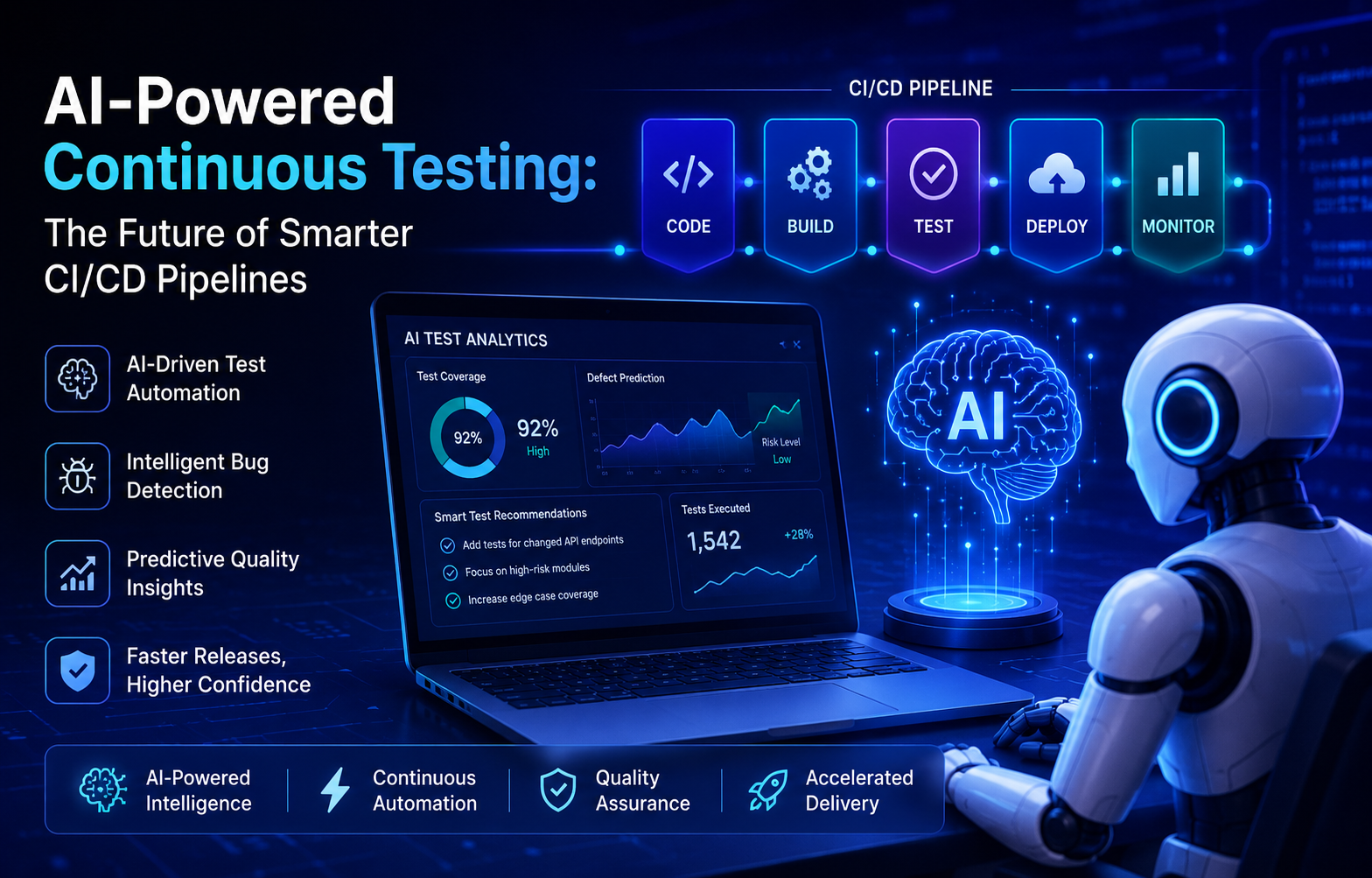
  • AI-Powered Continuous Testing: The Future of CI/CD

    Modern CI/CD pipelines need more than traditional test automation. Learn how AI can optimize testing workflows, identify defects earlier, reduce manual effort, and support faster, more reliable software releases.

    🔗 https://ai-software-seasia.hashnode.dev/how-ai-is-transforming-continuous-testing-in-modern-ci-cd-pipelines

    #AI #ContinuousTesting #DevOps #CICDPipeline #Automation #SoftwareQuality #AITesting #DigitalTransformation
    AI-SOFTWARE-SEASIA.HASHNODE.DEV
    How AI Is Transforming Continuous Testing in Modern CI/CD Pipelines
    For years, high-velocity engineering teams faced a persistent paradox: ship fast and risk breaking production, or test thoroughly and cripple build velocity. CI/CD pipelines promised non-stop automate
    692 Views
  • A Practical Guide to LLM Testing in CI/CD Pipelines

    Discover practical approaches to testing large language models throughout the CI/CD lifecycle. Learn how automated validation, prompt evaluation, regression testing, and performance monitoring can help maintain AI quality while accelerating software delivery.

    Read more: https://dzone.com/articles/llm-testing-cicd

    #LLM #LLMTesting #AITesting #AIQuality #PromptEngineering #CI_CD #DevOps #ContinuousIntegration #ContinuousDelivery #SoftwareQuality
    965 Views
  • How to Seamlessly Integrate AI Plugins into Your Software Development Workflow

    https://www.unifiedinfotech.net/blog/integrate-ai-plugins-into-software-development-workflow/

    #AIIntegration #AIinSoftware #SoftwareDevelopment #AIPlugins #DevWorkflow #AIDrivenDevelopment #MachineLearning #TechInnovation #CodingWithAI #SoftwareAutomation
    WWW.UNIFIEDINFOTECH.NET
    AI plugin integration in software development
    Learn the process of AI plugin integration in software development to improve code quality, automate CI/CD, and boost productivity.
    1.2K Views
  • Scripts et Web Development : Le nouveau moteur de l’innovation digitale
    En 2026, le développement web ne se limite plus à l'écriture de simples pages statiques. L'essor de l'automatisation et l'intégration de scripts avancés redéfinissent ce que signifie "être développeur web". Qu'il s'agisse d'optimiser les performances ou de créer des interfaces dynamiques, la maîtrise des scripts est devenue le...
    Like
    1
    5K Views
  • From Manual to AI: The Future of Test Case CreationStep beyond manual scripting and embrace AI-powered test case generation. This blog explains how AI enhances QA productivity, ensures better coverage, and helps teams keep up with agile and CI/CD demands in modern software development.Also read: https://medium.com/kanikavatsyayan/beyond-manual-scripting-transforming-qa-with-ai-test-case-generation-6814f642a9b1 #AITesting #TestAutomation #SoftwareTesting #QualityAssurance #AIinQA
    634 Views
More Results
© 2026 PaySocial | Monetize your skills and share your projects