PaySocial | Monetize your skills and share your projects

Search

Discover new people, create new connections and make new friends

  • Transform Healthcare Services with Custom AI Agent Development

    Every minute your staff spends on repeat calls and paperwork is a minute taken away from patients. An experienced AI Agent Development Company can help build custom AI agents, healthcare chatbots and conversational agents, multi-agent systems, Generative AI integration, RAG solutions, AI workflow automation, AI agent integration, and custom software solutions. These technologies can support patient inquiries, appointment coordination, administrative tasks, and information management, with AI security and monitoring. Beleaf Technologies brings professional AI agent development expertise, offering enterprise AI agents, multi-agent collaboration, human-in-the-loop automation, business-context-aware solutions, domain-specific agents, agent frameworks, data storage, and performance evaluation. We value client feedback and tailor solutions to your requirements, from planning and design to development, maintenance, and upgrades. If you're a healthcare startup, growing business, or enterprise, explore our services and request a free live demo with expert guidance.

    “From Ideas to Intelligent Solutions: Choose the Right AI Agent Development Company free Demo”
    https://www.beleaftechnologies.com/top-ai-agent-development-companies-in-2026

    Reach us :-
    WhatsApp : +91 7904323274
    Email id : business@beleaftechnologies.com
    Telegram : https://telegram.me/BeleafSoftTech
    176 Views
  • Make every customer interaction count with custom AI chatbot development! SynapseIndia builds intelligent chatbots powered by OpenAI, Claude, Gemini, and RAG architecture to deliver context-aware responses and business-specific assistance. Whether you need customer support bots, sales assistants, WhatsApp bots, or workflow automation, our AI solutions help your business operate smarter and serve customers better. Learn more at https://www.synapseindia.com/services/ai-chatbot-development.html
    102 Views
  • A funny first-person account of playing Ragdoll Archers in a browser, from hopeful aiming and bad angles to ragdoll chaos and the inevitable one-more-round. https://ragdollarchersonline.io
    RAGDOLLARCHERSONLINE.IO
    Ragdoll Archers
    Play Ragdoll Archers, a physics-based archery combat game. Aim, shoot, manage health and stamina, earn skulls, and survive enemy archers. Play free in your browser.
    128 Views
  • Laughing at my own chaos in Ragdoll Archers https://ragdollarchersonline.io : browser-based stickman archery, ragdoll physics, gravity tweaks, and wildly unpredictable shots today again.
    RAGDOLLARCHERSONLINE.IO
    Ragdoll Archers
    Play Ragdoll Archers, a physics-based archery combat game. Aim, shoot, manage health and stamina, earn skulls, and survive enemy archers. Play free in your browser.
    138 Views
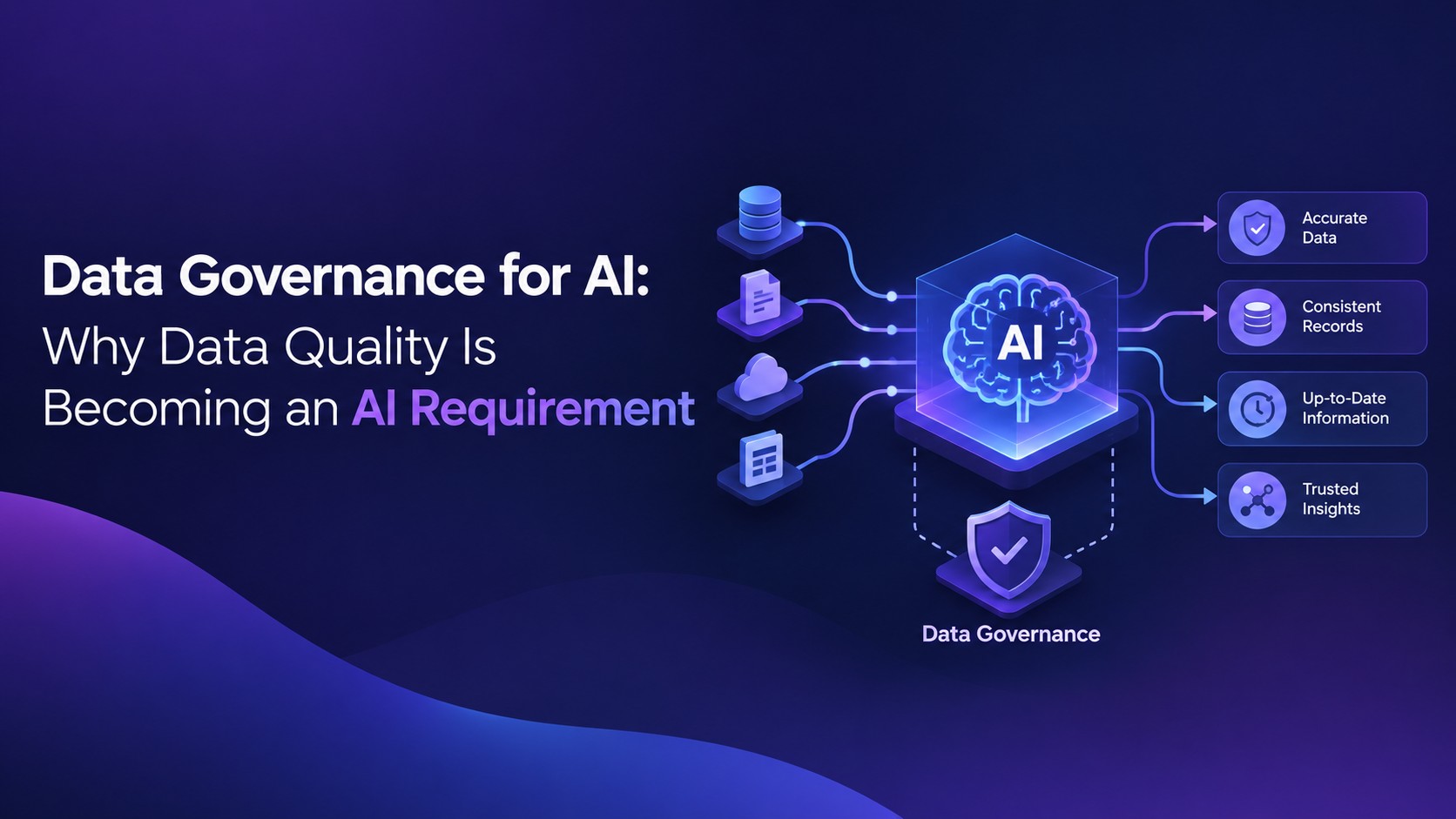
  • As AI moves from simple copilots to RAG systems, autonomous agents, and production workflows, data quality has become a core architectural requirement. Explore how freshness, metadata, lineage, access controls, and validation shape reliable AI systems. Check out the full article for a practical enterprise perspective.

    Click here: https://techbullion.com/data-governance-for-ai-why-data-quality-is-becoming-an-ai-requirement/

    #DataGovernance #EnterpriseAI #AIData #ArtificialIntelligence #AIGovernance
    TECHBULLION.COM
    Data Governance for AI: Why Data Quality Is Becoming an AI Requirement
    Without systematic data governance, enterprise AI deployment introduces unmanageable operational risks, from inaccurate corporate decisions
    312 Views
  • How to Build an AI Chatbot for Customer Support

    Learn how to build an AI chatbot for customer support with the right architecture, RAG, business integrations, guardrails, human handoff, testing, and monitoring. This guide explains how to automate support workflows, connect CRM and helpdesk systems, improve response quality, and scale customer service with secure, reliable AI for enterprise use.

    Visit Us: https://vegavid.com/blog/how-to-build-ai-chatbot-for-customer-support
    131 Views
  • Rags for Glass Industry for Reliable Cleaning

    Find dependable Rags for Glass Industry from Sam’s Rags, designed to support cleaning, wiping, polishing, and maintenance tasks in glass manufacturing and processing environments. Quality cleaning rags can help remove dust, dirt, fingerprints, residue, and other marks from glass surfaces while supporting everyday workplace maintenance. Suitable for glass factories, workshops, fabrication facilities, and commercial operations, these rags offer a practical solution for regular cleaning requirements. Businesses can choose suitable rag options based on their cleaning and wiping needs, helping maintain clean work areas, equipment, and glass surfaces efficiently. For more information, visit https://samsrags.com.au/rags-for-glass-industry/
    197 Views
  • LLMs have transformed AI, but they are only part of the bigger picture. New architectures and AI approaches are opening the door to more powerful enterprise applications. Explore what comes beyond LLMs and how organizations can prepare for the next phase of generative AI. Read the full blog to learn more.

    Click here: https://my.ai.se/resources/beyond-llms-building-the-next-generation-of-generative-ai-solutions

    #GenerativeAI #AI #LLMs #EnterpriseAI #AIInnovation #FutureTech
    MY.AI.SE
    Beyond LLMs: Building the Next Generation of Generative AI Solutions
    The first wave of enterprise artificial intelligence was undoubtedly defined by large language models. Chatbots, automated copy generation, and natural language code completion demonstrated text-predictive intelligence. But as corporate deployment matures, engineering leaders are running into distinct walls. Multi-variable supply chain streams, high-resolution diagnostic imaging, dynamic tabular databases, and real-time robotic controls challenge text-only processing. Latency issues, high inference costs, and hallucination risks make standard text models too costly for enterprise applications. To move beyond language models in isolation, we need to develop Generative AI Solutions that incorporate multimodal data, run autonomous action cycles, and run within specialized domain architectures. Developing modern enterprise AI solutions requires moving beyond basic prompt engines to mature, end-to-end system platforms. Why Large Language Models Are Reaching Operational Limits Although LLMs translate text proficiently in an unstructured way, their architecture becomes a bottleneck in operational processes. High Inference Costs and Resource Constraints Running massive parameter models requires significant compute power and continuous GPU allocation. For enterprises scaling high-throughput transaction processing, the cost per query under a massive model architecture quickly erodes margins. Structural Inability to Handle Dynamic Tabular Data Standard text models predict token sequences rather than calculating numerical state transitions. When fed massive relational databases, vector structures, or financial spreadsheets, traditional text models struggle with exact logic, leading to structural inaccuracies or subtle calculation errors. Hallucination Risks in High-Stakes Environments Uncertainty estimation remains a core challenge in pure text models. In fields like clinical diagnostics, risk underwriting, or legal compliance, a probabilistic model guessing the next word without deterministic validation creates unacceptable compliance risk. Core Foundations of Next-Generation AI Architectures Moving beyond pure language models requires a shift to multimodal ai architectures that can perceive, reason, and execute across diverse formats. Multimodal Intelligence Frameworks Instead of using text descriptions for non-text inputs, today’s multimodal systems work directly with raw visual signals, sensor telemetry, videos, and audio frequencies. Multimodal-native systems perform significantly better with complex real-world data. For instance, healthcare platforms processing high-resolution medical scans alongside patient history achieve faster diagnostic throughput when using unified vision-language structures rather than disjointed processing steps. Autonomous Agentic Workflows The evolution from static Q&A systems to multi-agent environments allows AI systems to act independently. Instead of generating a passive response, autonomous agents divide high-level corporate objectives into sequential sub-tasks- Querying internal vector databases and enterprise APIs. Executing automated software testing cycles. Validating output accuracy against business logic rules. Writing results back to enterprise resource planning platforms. Specialized Small Language Models (SLMs) and Edge Architectures Bigger is no longer automatically better. Compact, highly specialized models trained on curated, domain-specific datasets routinely outperform massive foundation models on focused tasks - at a fraction of the computational footprint. Deploying optimized ML solutions at the edge reduces bandwidth dependencies, protects confidential data, and lowers latency for industrial applications. Neuro-Symbolic Integration Integrating neural networks with symbolic logic ensures that deterministic logic is included in artificial intelligence technology. Neural networks handle pattern recognition and intuitive data interpretation, while symbolic logic engines enforce rules, equations, and business requirements to prevent hallucinations in regulated industries. Key Industry Trends Driving System Adoption Corporate real estate, industrial manufacturing, logistics, and software development are aggressively updating their tech stacks to support robust generative AI solutions alongside multi-model platforms. Rise of World Models- Industrial robotics and autonomous logistics rely increasingly on spatial world models that simulate real-world physics and spatial relationships, allowing machines to navigate unpredictable warehouse environments accurately. Hybrid Cloud-to-Edge Orchestration- Enterprise technology teams deploy small localized models directly on field devices while reserving massive cloud infrastructure strictly for heavy periodic retrain cycles. Enterprise Customization via RAG and Graph Databases- Companies are replacing raw model fine-tuning with advanced Retrieval-Augmented Generation (RAG) wired directly into knowledge graphs, ensuring outputs remain grounded in real company data. Industry forecasts indicate that enterprise adoption of task-specific agents and specialized domain models is growing dramatically, with research projecting up to 40% of enterprise applications integrating task-driven AI agents as spending shifts toward targeted, high-efficiency models. Strategic Roadmap for Enterprise Deployment Navigating the transition from basic text tools to robust, scalable generative AI services requires a structured engineering approach. Step 1- Audit Data Pipeline Maturity Before choosing model architectures, ensure internal enterprise data is clean, indexed, and accessible via secure APIs. Disorganized, siloed data degrades even the most advanced system performance. Step 2- Match Business Use Cases to Model Size Avoid using massive models for simple operational tasks. Map each corporate initiative to its precise performance metrics. Use lightweight machine learning solution builds for real-time analytics, and reserve large multimodal models for complex data synthesis. Step 3- Partner with Specialized Engineering Experts Developing bespoke multimodal pipelines, creating secure agentic workflows, and deploying hybrid edge models all need extensive industry knowledge. Working with a skilled AI ML development company will help ensure your system design avoids future architectural changes. Final Words The use of large language models alone is just the beginning of the wider artificial intelligence wave. The future is integrated, multimodal, agentic generative ai solutions ecosystems that seamlessly combine pattern recognition with rigid business logic. Forward-thinking organizations will be able to build scalable digital infrastructure that delivers measurable long-term business value, with a focus on lean model architectures, robust data pipelines and deterministic verification layers.
    496 Views
  • Wastewater Trash Rakes: Efficient Debris Removal for Clean Water Systems


    Wastewater trash rakes are essential equipment for removing debris and solids from incoming water streams. These mechanical systems use flexible, durable designs to efficiently trap leaves, rags, and other contaminants, improving water flow rates through treatment plants. Modern wastewater trash rakes automate the collection and disposal process, reducing manual labor while maintaining consistent operation. By clearing debris effectively, wastewater trash rakes prevent equipment damage and blockages downstream, ensuring facilities operate smoothly and meet environmental standards. Proper debris removal through quality wastewater trash rakes is essential for any effective water treatment process.

    158 Views
  • Comprehensive Growth Analysis of the Winter Wheat Seed Market


    The agricultural sector relies heavily on high-performing crop varieties to ensure global food security, making the Winter Wheat Seed market a critical pillar of modern agronomy. As farmers seek to maximize yields under varying climatic conditions, the demand for genetically superior, disease-resistant, and high-yielding seed varieties continues to surge, transforming the agricultural landscape worldwide.


    📊 Get a Free Sample Report + All Related Graphs & Charts:https://www.marketreportanalytics.com/report/winter-wheat-seed-118430/sample-report


    Market Overview and Dynamics


    The global Winter Wheat Seed market is experiencing robust expansion, driven by increasing food consumption, population growth, and the ongoing need for agricultural optimization. In the base year of 2025, the market is valued at approximately $5.7 billion. Looking forward, the market is projected to maintain a steady upward trajectory, exhibiting a compound annual growth rate (CAGR) of 3.44% over the forecast period. Primary market drivers include advancements in agricultural biotechnology, rising investments in research and development for climate-resilient crop strains, and government initiatives supporting sustainable farming practices. However, the market also faces challenges such as unpredictable weather patterns, stringent regulatory frameworks governing genetically modified crops, and fluctuating raw material costs. Despite these hurdles, technological innovations in seed breeding and coating technologies continue to create lucrative growth opportunities for industry stakeholders.

    Competitive Landscape and Key Players


    The competitive landscape of the Winter Wheat Seed market is characterized by intense rivalry among a diverse mix of multinational agribusiness corporations, regional seed producers, and dedicated biotechnology firms. Key industry participants are increasingly focusing on strategic mergers, acquisitions, and collaborative research partnerships to expand their product portfolios and strengthen their global market footprint. Emphasizing trait innovation and high-purity seed production remains a core strategy for maintaining a competitive edge. The prominent companies profiled in this comprehensive market report include Limagrain, Dupont Pioneer, Syngenta, AGT, KWS, RAGT, Monsanto, Northern, C & M SEEDS, Pro Harvest, Advanta, Seed Co, Agrovegetal, Anhui Wanken, Henan Tiancun, Hefei Fengle, Longping, Henan Qiule, Jiangsu Dahua, Gansu Dunhuang, Win-all Hi-tech, Jiangsu Zhongjiang, Zhong Bang, China Seed, Shandong Denghai, and Shandong Luyan.


    Regional Outlook


    Geographically, the global Winter Wheat Seed market spans across several major regions, including North America (comprising the United States, Canada, and Mexico), South America (featuring Brazil, Argentina, and the Rest of South America), Europe (highlighting the United Kingdom, Germany, France, Italy, Spain, Russia, Benelux, Nordics, and the Rest of Europe), the Middle East & Africa (covering Turkey, Israel, GCC, North Africa, South Africa, and the Rest of Middle East & Africa), and the Asia-Pacific region (encompassing China, India, Japan, South Korea, ASEAN, Oceania, and the Rest of Asia-Pacific). North America and Europe hold significant market shares due to advanced agricultural infrastructure and high adoption rates of certified seeds. Meanwhile, the Asia-Pacific region, led by agricultural powerhouses like China and India, represents one of the fastest-growing markets driven by large-scale farming operations and rising food security initiatives.


    📊 Explore the full report for deeper insights:https://www.marketreportanalytics.com/reports/winter-wheat-seed-118430


    📊 For complete insights, forecasts, and data tables, visit the full report:https://www.marketreportanalytics.com/reports/winter-wheat-seed-118430


    Contact US:
    Craig Francis (PR & Marketing Manager)
    Data Insights Market
    Ansec House, 3rd Floor, Tank Road
    Yerwada, Pune
    📞 Phone: +1 231-515-5523
    📧 Email: sales@marketreportanalytics.com
    Market Report Analytics: Get Market Research Analysis with Market Share, Market Size & Forecast Analysis
    Market Report Analytics stands as a premier Market Research Company, offering quantified B2B research that uncovers high-growth emerging opportunities impacting over 80% of global corporate revenues. Our team of Analysts diligently tracks high-growth studies, providing detailed statistical analyses and in-depth insights into market trends and dynamics, delivering a comprehensive industry overview. Employing an extensive research methodology, we fuse critical insights with industry factors and market forces to deliver optimal value to our clients. Drawing from reliable primary and secondary data sources, our analysts and consultants extract actionable data tailored to meet our clients' business objectives.
    198 Views
More Results
© 2026 PaySocial | Monetize your skills and share your projects