PaySocial | Monetize your skills and share your projects

Search

Discover new people, create new connections and make new friends

  • The Future of Digital Learning: AI-Powered LMS Features and Benefits

    What makes a modern learning management system intelligent? AI-powered recommendations, virtual learning assistants, predictive analytics, and adaptive assessments are reshaping digital learning experiences.

    Read more: https://www.seasiainfotech.com/blog/ai-powered-learning-management-system

    #ArtificialIntelligence #EdTechSolutions #SmartLearning #LMS #AIInnovation
    WWW.SEASIAINFOTECH.COM
    AI-Powered Learning Management System for Enterprises
    Explore how AI-powered learning management systems improve employee training through personalized learning, enterprise integration, and predictive analytics.
    130 Views
  • LED X-ray Viewers Australia-Improve Medical Film Viewing with Clear LED Lighting

    Looking for high-quality LED X-ray viewers in Australia? Discover Maggylamp X-ray Viewers from Redbank Group, designed to provide bright, clear, and even illumination for medical film viewing. Ideal for hospitals, clinics, and diagnostic centres, these viewers help medical professionals examine X-ray images with better visibility. With modern LED technology, adjustable brightness, and practical designs, they offer a reliable solution for everyday medical use.

    Explore the Maggylamp range and find the right X-ray viewer for your workplace.

    Visit Now: https://redbank.net.au/products/maggylamp-x-ray-viewers
    REDBANK.NET.AU
    Maggylamp X-Ray Viewers
    4 Sizes(mm) 1 Bay 478x500x25, 2 Bays 838x500x25, 3 Bays 1198x500x25 and 4 Bays1558x500x25. (Choose Option) Visual Size(mm) 361x420, 721x420, 1081x420 and 1441x420. Power 30 Watt (1 Bay), 60 Watt (2 Bays), 90 Watt (3 Bays) and 120 Watt (4 Bays). Light source mode Side-lit light mode Light Source Super high brightness SMD LED 144PCS/panel;8 000K CT;LED Lifespan of 100 000hours Global Voltage Adaptive built-in power input; AC90V-240V;50/60Hz Brightness Setting 3 PWM dimming system; brightness 0-100% continuous adjustable Clip device Silicone clip device Mount Type: Wall-mounted or optional bracket Application Films General film, digital film, breast mammography film Sensor function The panel will light up when film inserted and off when moved away. Aviation material with ABS cases, the case thickness is only 25mm. Full Digital Control PWM Low-Voltage Digital Continuous Dimming System LED Constant Current Drive Power Automatic film activation
    129 Views
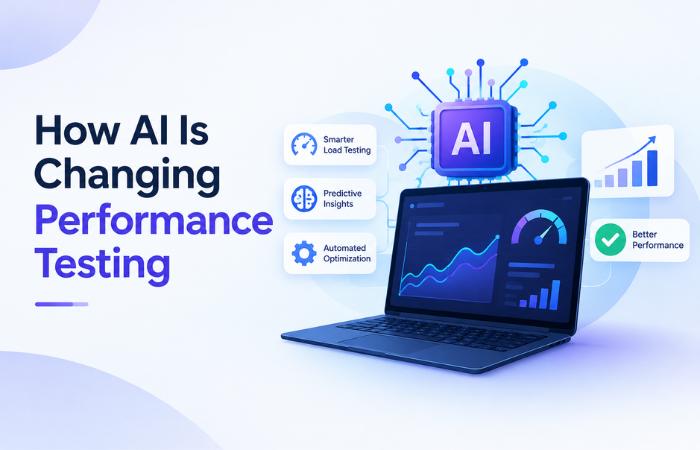
  • Explore the latest trends in AI-powered performance testing and how intelligent automation, anomaly detection, and predictive insights help identify performance issues earlier. Discover practical ways to optimize application performance, reduce testing effort, and support faster releases.

    Find more: https://my.ai.se/resources/how-ai-is-changing-performance-testing

    #PerformanceTesting #AIPerformanceTesting #LoadTesting
    MY.AI.SE
    How AI Is Changing Performance Testing
    Performance testing has always been about answering practical questions. How many users can the application support? What happens when traffic spikes? Which component becomes the bottleneck first? How quickly does the system recover once the load drops? Those questions have not changed. The way teams answer them is starting to. Traditional performance testing relies heavily on scripted workloads, predefined thresholds, monitoring tools, and manual analysis. That still works, but modern applications have become harder to read. Microservices, cloud infrastructure, APIs, databases, queues, third-party services, and distributed architectures can all contribute to one slow transaction. This is where AI performance testing is beginning to make a difference. From Static Load Profiles to Smarter Workloads A standard performance test often starts with a predefined load model. For example, 500 users log in, 200 browse products, 100 add items to cart, and 50 complete checkout. That is useful, but production traffic rarely behaves so neatly. User behavior changes by time of day, geography, campaigns, devices, and feature usage. A flash sale may create a very different traffic pattern from a normal weekday. Some workflows may spike while others remain steady. AI-powered performance testing can help build workload models from real usage patterns rather than relying only on manually designed scenarios. Historical traffic, transaction volumes, user journeys, and incident data can all be used to identify what a realistic stress pattern should look like. That makes the test closer to the way the system is actually used. AI Makes Bottleneck Analysis Faster Running a load test is often the easy part. The harder part begins when response time jumps from 400 milliseconds to four seconds and the team needs to figure out why. Was it the database? A slow API? Thread exhaustion? Memory pressure? A downstream service? Network latency? A cloud autoscaling delay? In a distributed system, the answer may involve several of these at once. AI can help correlate metrics across logs, traces, infrastructure, and application performance data to narrow down the likely source of degradation. Instead of manually reviewing dozens of dashboards, engineers can use AI-assisted analysis to identify recurring patterns and suspicious relationships. This is where performance engineering benefits most: not from automating the test itself, but from reducing the time between “something slowed down” and “this is probably where the problem is.” Performance Testing Automation Is Becoming More Adaptive Automation in performance testing is not new. Teams have been running load tests inside CI/CD pipelines for years. What is changing is how those tests are selected and interpreted. A traditional pipeline may run the same suite after every major build. An AI-assisted system can be more selective. If a release touches only a payment service, the system may prioritize payment-heavy scenarios. If a previous deployment caused memory issues under sustained load, that pattern can be given more weight in future runs. This makes performance testing automation more responsive to actual release risk. The goal is not necessarily to run fewer tests. It is to run the ones that are most useful at that moment. Anomaly Detection Is One of the Strongest Use Cases Performance degradation is not always dramatic. A page may become 8% slower after one release, then another 6% slower later. Neither change looks serious in isolation, but together they point to a trend. AI-based anomaly detection is well suited to finding these gradual shifts. It can compare current results against historical baselines and flag behavior that falls outside the normal range, even if the system has not crossed a hard threshold. That is particularly useful in cloud environments where normal performance may vary depending on traffic, resource allocation, & infrastructure conditions. AI Workload Testing Can Improve Capacity Planning Capacity planning often depends on historical data & projected business growth. AI workload testing can help generate and compare scenarios that would be tedious to model manually. This is useful when teams need to prepare for events such as product launches, sales campaigns, onboarding spikes, or geographic expansion. It does not eliminate the need for actual load testing, but it can make those tests better targeted. Tools Still Matter AI does not remove the need for established performance testing tools. Teams still need reliable ways to generate load, measure latency, monitor infrastructure, trace requests, and validate system behavior under pressure. The tool choice depends on architecture, protocols, scalability requirements, scripting needs, & how deeply the test needs to integrate with CI/CD. For teams comparing options, this overview of performance testing tools is a useful place to evaluate the strengths and trade-offs of commonly used platforms. AI is increasingly becoming another layer on top of that tooling rather than a replacement for it. There Are Limits to What AI Can Infer AI-assisted analysis is useful, but teams should be careful about treating every recommendation as fact. A model may identify correlation without proving causation. It may flag one service as suspicious when the real issue originates elsewhere. Poor monitoring data can also lead to poor conclusions. That means engineers still need to validate the diagnosis. Performance problems are often architectural. Understanding caching, concurrency, network behavior, database design, and service dependencies still requires technical judgment. AI can accelerate investigation, but it cannot compensate for weak observability or incomplete test design. Performance Testing Is Becoming More Predictive The biggest change is that AI testing is moving performance work away from purely reactive analysis. Traditional testing often asks, “What broke under load?” AI-assisted approaches can also ask, “What is likely to break next?” That shift matters. By combining historical failures, traffic patterns, release changes, anomaly detection, and infrastructure data, teams can make better decisions about where to focus testing before performance problems reach production. The fundamentals remain the same: apply realistic load, measure the system, identify bottlenecks, and fix them. What AI changes is how quickly teams can get from raw performance data to useful engineering decisions.
    257 Views
  • Traditional testing methods can struggle with complex applications and frequent releases. AI-driven testing introduces intelligent automation, faster analysis, and adaptive testing capabilities. Explore how modern QA teams can use AI alongside established testing practices to improve coverage, reduce repetitive effort, and deliver reliable software.

    For more: https://landofcoder.com/blog/ai-vs-traditional-testing.html

    #AITesting, #AIvsTraditionalTesting, #SoftwareTesting, #QATesting
    LANDOFCODER.COM
    AI vs Traditional Testing: Which Approach Is Better for Ecommerce?
    Compare AI vs traditional testing for ecommerce to see where each approach works best across regression, visual, security, performance, and functional testing.
    291 Views
  • Investing in the Future of Learning: The Course Authoring Platform Market Opportunity


    The Course Authoring Platform market presents a significant investment opportunity, with the global market size estimated at approximately $3950 million and expected to grow at a CAGR of around 15% by 2026. As the demand for online learning and training continues to rise, the need for efficient and effective course authoring platforms has become increasingly important. This report provides an in-depth analysis of the market, including its current state, trends, drivers, and challenges. For investors looking to capitalize on this growing market, our report offers a comprehensive overview, including a free sample report available at https://www.promarketreports.com/report/course-authoring-platform-312783/sample-report.


    Market Opportunity and Investment Thesis
    The Course Authoring Platform market is driven by the increasing adoption of digital learning solutions, advancements in technology, and the need for personalized learning experiences. The market is expected to reach approximately $7000 million by 2026, growing at a CAGR of around 15%. Key drivers include the rising demand for online education, the growing need for skill development, and the increasing adoption of cloud-based solutions. However, the market also faces challenges such as high development costs, limited accessibility, and the need for continuous updates and maintenance.


    Segmentation Analysis
    The market can be segmented into two main types: Cloud-based and On-premises. The Cloud-based segment is expected to dominate the market, driven by its scalability, flexibility, and cost-effectiveness. The market can also be segmented by application into SMEs and Large Enterprises. The SMEs segment is expected to grow at a higher CAGR, driven by the increasing adoption of digital learning solutions among small and medium-sized businesses.
    Segment Type Sub-Segment Example Forecast CAGR (2024–2032)
    Cloud-based Public Cloud 18%
    On-premises Private Cloud 12%
    SMEs Small Businesses 20%
    Large Enterprises Corporate Training 15%


    Strategic Company Analysis
    The Course Authoring Platform market is highly competitive, with key players such as Visme, Chameleon Creator, Thinkific, Vairkko, Arlo, Accessplanit, Tovuti LMS, Raptivity, Coassemble, iSeazy, iSpring, Gomo Learning, Elucidat, AdaptiveU, Crowd Wisdom, Adobe Captivate, Articulate 360, Lectora, DominKnow, Easy Generator, Evolve, and H5P. These companies are focusing on developing innovative solutions, expanding their product portfolios, and strengthening their market presence through strategic partnerships and collaborations.


    Profitable Regions & Expansion Hotspots
    The market is segmented into several regions, including North America, South America, Europe, Middle East & Africa, and Asia Pacific. North America is expected to dominate the market, driven by the high adoption of digital learning solutions in the US and Canada. The Asia Pacific region is expected to grow at a higher CAGR, driven by the increasing demand for online education and the growing need for skill development in countries such as China and India.


    Table of Contents (TOC)
    Our comprehensive report includes the following chapters:
    1. Introduction
    2. Market Overview
    3. Segmentation Analysis
    4. Competitive Landscape
    5. Regional Outlook
    6. Conclusion For complete insights, forecasts, and data tables, visit the full report at https://www.promarketreports.com/reports/course-authoring-platform-312783.


    Contact US:
    Craig Francis (PR & Marketing Manager)
    Data Insights Market
    Ansec House, 3rd Floor, Tank Road
    Yerwada, Pune
    📞 Phone: +1 231-515-5523
    📧 Email: sales@promarketreports.com
    Get Market Research Analysis with Market Share, Market Size & Forecast Analysis Market | Pro Market Reports
    Pro Market Reports stands as a premier Market Research Company, offering quantified B2B research that uncovers high-growth emerging opportunities impacting over 80% of global corporate revenues. Our team of Analysts diligently tracks high-growth studies, providing detailed statistical analyses and in-depth insights into market trends and dynamics, delivering a comprehensive industry overview. Employing an extensive research methodology, we fuse critical insights with industry factors and market forces to deliver optimal value to our clients. Drawing from reliable primary and secondary data sources, our analysts and consultants extract actionable data tailored to meet our clients' business objectives.
    223 Views
  • Comprehensive Insights into the Autism Intervention Software Market


    The autism intervention software market is a burgeoning field, with an estimated market size of around $272 million and a compound annual growth rate (CAGR) of approximately 6.6%. This growth is driven by the increasing prevalence of autism spectrum disorder (ASD) and the need for effective intervention tools. As a result, the demand for autism intervention software is on the rise, making it an attractive market for investors and stakeholders. For those looking to navigate this complex market, a comprehensive understanding of the current landscape, trends, and future outlook is essential. Explore the Autism Intervention Software market in depth.

    📊 Get a Free Sample Report + All Related Graphs & Charts:https://sectordatainsights.com/report/autism-intervention-software-1552/sample-report


    Market Overview and Dynamics
    The autism intervention software market is characterized by a growing demand for personalized and adaptive intervention tools. The market is driven by factors such as the increasing prevalence of ASD, advancements in technology, and the need for cost-effective solutions. The CAGR of approximately 6.6% indicates a steady growth rate, with the market expected to reach new heights in the coming years. Key drivers include government initiatives, growing awareness, and the development of innovative technologies.


    Regional Outlook
    The autism intervention software market is a global market, with various regions contributing to its growth. The regions covered in this report include North America (United States, Canada, Mexico), South America (Brazil, Argentina, Rest of South America), Europe (United Kingdom, Germany, France, Italy, Spain, Russia, Benelux, Nordics, Rest of Europe), Middle East & Africa (Turkey, Israel, GCC, North Africa, South Africa, Rest of Middle East & Africa), and Asia Pacific (China, India, Japan, South Korea, ASEAN, Oceania, Rest of Asia Pacific). Each region has its unique characteristics, challenges, and opportunities, making it essential to understand the regional dynamics. 📊 Explore the full report for deeper insights:https://sectordatainsights.com/reports/autism-intervention-software-1552


    Table of Contents (TOC)
    A sample table of contents for this report includes:
    1. Introduction
    2. Market Overview
    3. Segmentation Analysis
    4. Competitive Landscape
    5. Regional Outlook
    6. Future Outlook
    7. Conclusion 📊 For complete insights, forecasts, and data tables, visit the full report:https://sectordatainsights.com/reports/autism-intervention-software-1552


    Contact US:
    Craig Francis (PR & Marketing Manager)
    Data Insights Market
    Ansec House, 3rd Floor, Tank Road
    Yerwada, Pune
    📞 Phone: +1 231-515-5523
    📧 Email: sales@sectordatainsights.com
    Get Market Research Analysis with Market Share, Market Size & Forecast Analysis Market | Sector Data Insights
    Sector Data Insights stands as a premier Market Research Company, offering quantified B2B research that uncovers high-growth emerging opportunities impacting over 80% of global corporate revenues. Our team of Analysts diligently tracks high-growth studies, providing detailed statistical analyses and in-depth insights into market trends and dynamics, delivering a comprehensive industry overview. Employing an extensive research methodology, we fuse critical insights with industry factors and market forces to deliver optimal value to our clients. Drawing from reliable primary and secondary data sources, our analysts and consultants extract actionable data tailored to meet our clients' business objectives.
    291 Views
  • Car Safety Market to Reach USD 340.31 Billion by 2034 as ADAS and Active Safety Technologies Accelerate

    The Car Safety Market was valued at USD 156.43 Billion in 2025 and is expected to reach nearly USD 340.31 Billion by 2034, expanding at a CAGR of 9.02% from 2026 to 2034. Increasing road-safety concerns, rising adoption of electric and software-defined vehicles, stricter vehicle-safety regulations, and rapid integration of advanced driver-assistance systems are driving demand for automotive safety technologies. Modern vehicles increasingly incorporate automatic emergency braking, blind-spot monitoring, lane-keeping assistance, adaptive cruise control, airbags, seatbelts, driver-monitoring systems and electronic stability technologies.

    Growing vehicle electrification is creating another important opportunity for the Car Safety Market, as EV manufacturers integrate advanced sensing, braking, monitoring and collision-prevention systems to improve occupant and pedestrian protection. Increasing use of radar, cameras, LiDAR, artificial intelligence and sensor-fusion platforms is also moving vehicle safety from reactive crash protection toward systems capable of identifying risks before an accident occurs.

    Get Exclusive Sample Access :https://www.maximizemarketresearch.com/request-sample/34303/

    Car Safety Market Segmentation Analysis

    Active safety represented the largest system-type segment, holding approximately 47.5% share in 2025. Technologies such as automatic emergency braking, lane-departure warning, blind-spot monitoring and adaptive cruise control help prevent accidents before they occur, supporting continued adoption across both conventional and electric vehicles. By end user, OEMs held the largest share in 2025 because manufacturers integrate airbags, ABS, electronic stability control and increasingly advanced driver-assistance technologies directly into new vehicles. MMR expects both leading segments to remain strategically important through 2034.

    Car Safety Market Regional Analysis

    Europe held approximately 46.17% of global revenue in 2025, making it the leading region, while Asia Pacific accounted for around 20.1% and was identified by MMR as the fastest-growing region.

    In the United States, federal AEB requirements are accelerating development of pedestrian detection and automatic braking. Germany and France benefit from European Union rules requiring technologies including intelligent speed assistance, reversing detection, driver drowsiness warnings, lane keeping and automated braking on new vehicles. These regulations are supporting continued demand for advanced safety equipment across European vehicle production.

    The UK is also influenced by increasing expectations for advanced safety and automated-driving technologies. Japan benefits from a strong domestic automotive technology base, including DENSO, Toyota and other suppliers developing radar, vision and driver-monitoring technologies. In China, government standardization efforts in 2025 focused on combined driver assistance, automatic emergency braking, automated parking and autonomous-driving safety requirements, supporting broader adoption of intelligent connected-vehicle technologies.

    Get Exclusive Sample Access :https://www.maximizemarketresearch.com/request-sample/34303/

    Car Safety Market Key Players
    Major companies listed in the Car Safety Market include Magna International Inc., General Motors Company, Stellantis, Aptiv PLC, Robert Bosch GmbH, Autoliv Inc., ZF Friedrichshafen AG, Continental AG, Infineon, Delphi Automotive PLC, Volkswagen Group, Valeo SA, Schaeffler AG, Veoneer Inc., Hyundai Mobis, Hyundai Motor Group, Denso Corporation, Toyoda Gosei Co. Ltd., Toyota Motor Corporation, Tata Motors, Toyota Boshoku Corporation and Mitsubishi Electric Corporation.
    465 Views
  • Adaptive reuse provides a practical way to keep historic buildings useful. A sustainable heritage architect Sussex can help explore how an existing property may accommodate a new purpose while preserving important architectural elements. Follow this link https://www.ecotecture.co.uk/heritage-architecture/
    134 Views
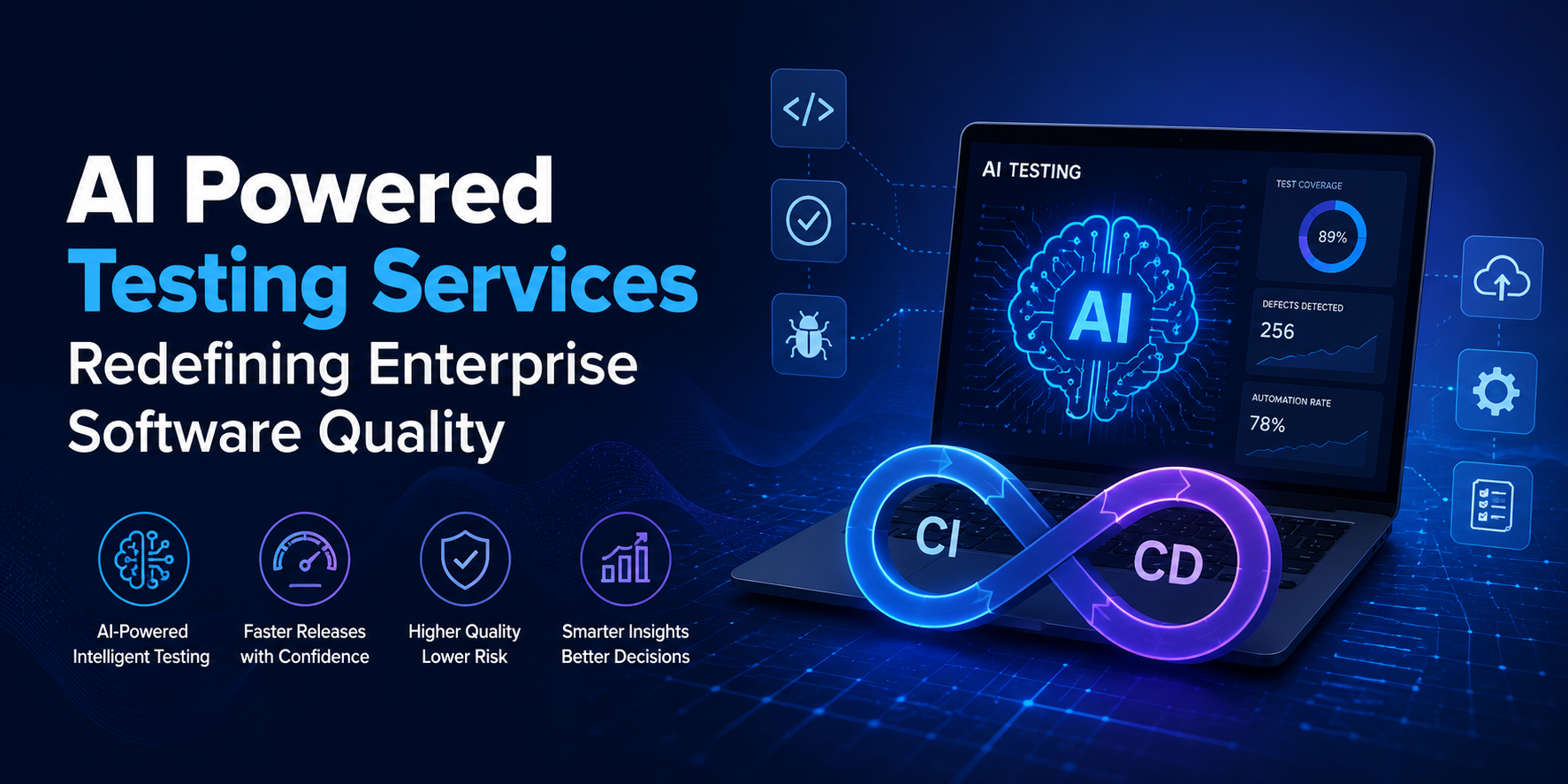
  • AI-Powered Testing Is Transforming Enterprise Software Quality

    Discover how AI-powered testing is helping enterprises reduce test maintenance, improve release confidence, and build more adaptive QA processes. Explore self-healing tests, predictive risk mapping, and intelligent automation.

    Read More: https://publicsectornetwork.com/insight/ai-powered-testing-is-changing-enterprise-software-quality

    #AIPoweredTesting #SoftwareTesting #QualityEngineering #TestAutomation #EnterpriseSoftware #AI #QA #SoftwareQuality
    PUBLICSECTORNETWORK.COM
    AI-Powered Testing Is Changing Enterprise Software Quality
    Discover how AI-powered testing services help enterprises automate QA, reduce test maintenance, accelerate releases, and improve software quality.
    625 Views
  • Unlocking the Potential of Automotive Adaptive Steering: A Comprehensive Market Analysis


    The automotive adaptive steering market is on the cusp of a significant transformation, driven by technological advancements and shifting consumer preferences. As the industry continues to evolve, it's essential for stakeholders to understand the current landscape and future prospects. This report provides an in-depth analysis of the Automotive Adaptive Steering market, covering key segments, regional trends, and competitive dynamics.

    📊 Get a Free Sample Report + All Related Graphs & Charts:https://www.marketreportanalytics.com/report/automotive-adaptive-steering-145723/sample-report


    Market Overview and Dynamics
    The global automotive adaptive steering market is estimated to be around $17.7 billion in 2025, growing at a CAGR of approximately 7.5% from 2025 to 2032. This growth is driven by increasing demand for advanced safety features, improved fuel efficiency, and enhanced driving experiences. The market is expected to reach approximately $32.1 billion by 2032, with the passenger vehicle segment dominating the market share. Key drivers include stringent safety regulations, technological advancements, and rising consumer awareness about vehicle safety and performance.


    Segmentation Analysis
    Segment Type Sub-Segment Example Forecast CAGR (2024–2032)
    Application Passenger Vehicle 8.1%
    Application Light Commercial Vehicle 7.3%
    Application Heavy Commercial Vehicle 6.5%
    Types Standard Steering 6.8%
    Types Direct Adaptive Steering 8.5%
    The market can be segmented into application (passenger vehicle, light commercial vehicle, heavy commercial vehicle) and types (standard steering, direct adaptive steering). Each segment offers unique growth opportunities, with the direct adaptive steering segment expected to witness significant growth due to its advanced safety features and improved driving dynamics.


    Competitive Landscape and Key Players
    The competitive landscape of the automotive adaptive steering market is characterized by the presence of prominent players such as Ford Motor Company, ZF Friedrichshafen, Thyssenkrupp AG, Nissan, BMW Group, Knorr-Bremse, Robert Bosch, Audi, INFINITI, Volvo Group, Mitsubishi Motors, JTEKT Corporation, Nexteer Automotive, Hyundai Mobis, and Showa Corporation. These companies are focusing on research and development to enhance their product offerings and expand their market share. Strategic partnerships, collaborations, and mergers and acquisitions are also expected to shape the competitive landscape in the coming years.


    Regional Outlook
    The automotive adaptive steering market is geographically diverse, with key regions including North America (United States, Canada, Mexico), South America (Brazil, Argentina, Rest of South America), Europe (United Kingdom, Germany, France, Italy, Spain, Russia, Benelux, Nordics, Rest of Europe), Middle East & Africa (Turkey, Israel, GCC, North Africa, South Africa, Rest of Middle East & Africa), and Asia Pacific (China, India, Japan, South Korea, ASEAN, Oceania, Rest of Asia Pacific). Each region presents unique opportunities and challenges, with the Asia Pacific region expected to dominate the market due to the presence of key manufacturers and a large consumer base.

    📊 Explore the full report for deeper insights:https://www.marketreportanalytics.com/reports/automotive-adaptive-steering-145723


    Table of Contents (TOC)
    1. Executive Summary
    2. Market Overview
    3. Segmentation Analysis
    4. Competitive Landscape
    5. Regional Outlook
    6. Future Outlook and Opportunities
    7. Conclusion 📊 For complete insights, forecasts, and data tables, visit the full report:https://www.marketreportanalytics.com/reports/automotive-adaptive-steering-145723


    Contact US:
    Craig Francis (PR & Marketing Manager)
    Data Insights Market
    Ansec House, 3rd Floor, Tank Road
    Yerwada, Pune
    📞 Phone: +1 231-515-5523
    📧 Email: sales@marketreportanalytics.com
    Market Report Analytics: Get Market Research Analysis with Market Share, Market Size & Forecast Analysis
    Market Report Analytics stands as a premier Market Research Company, offering quantified B2B research that uncovers high-growth emerging opportunities impacting over 80% of global corporate revenues. Our team of Analysts diligently tracks high-growth studies, providing detailed statistical analyses and in-depth insights into market trends and dynamics, delivering a comprehensive industry overview. Employing an extensive research methodology, we fuse critical insights with industry factors and market forces to deliver optimal value to our clients. Drawing from reliable primary and secondary data sources, our analysts and consultants extract actionable data tailored to meet our clients' business objectives.
    183 Views
More Results
© 2026 PaySocial | Monetize your skills and share your projects